Nilesh AnandSenior Product Designer
All work

B2BA’alda Vet IndiaVeterinary practice software

Vet360 Medical Records Revamp

40% less time to create a medical record

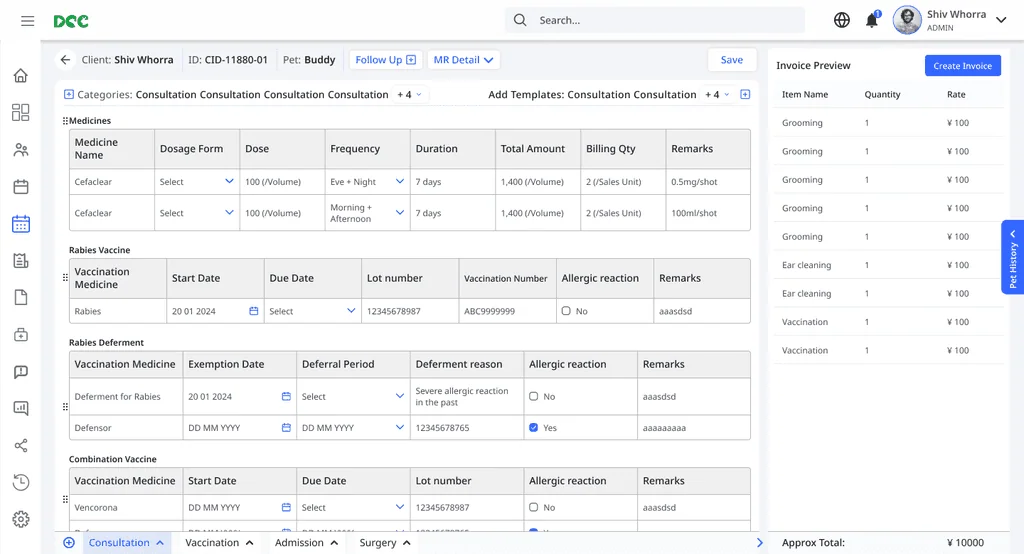
Vet360 is veterinary practice software. I rebuilt its medical record, one long fixed form cut off from billing and labs, as blocks a vet can add and reorder per visit.

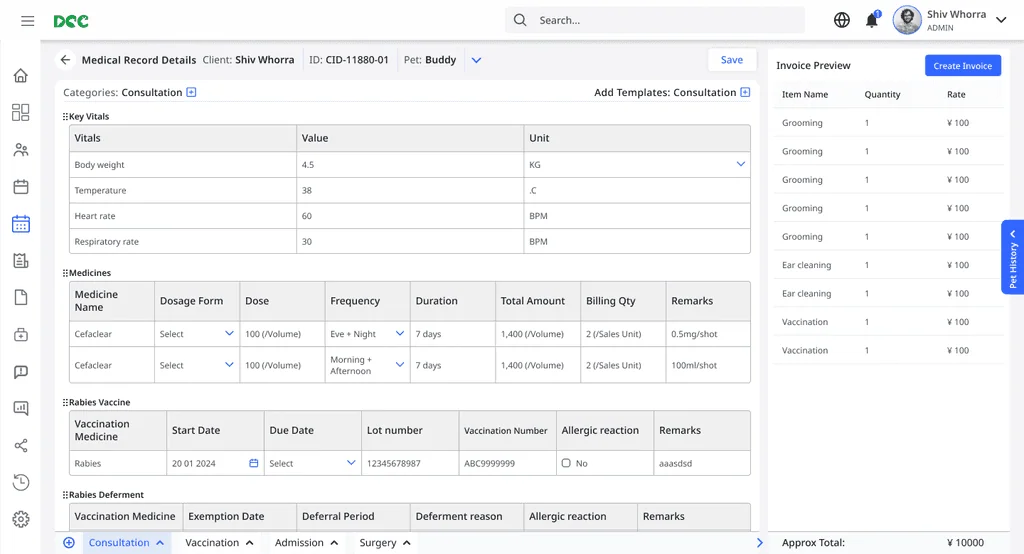
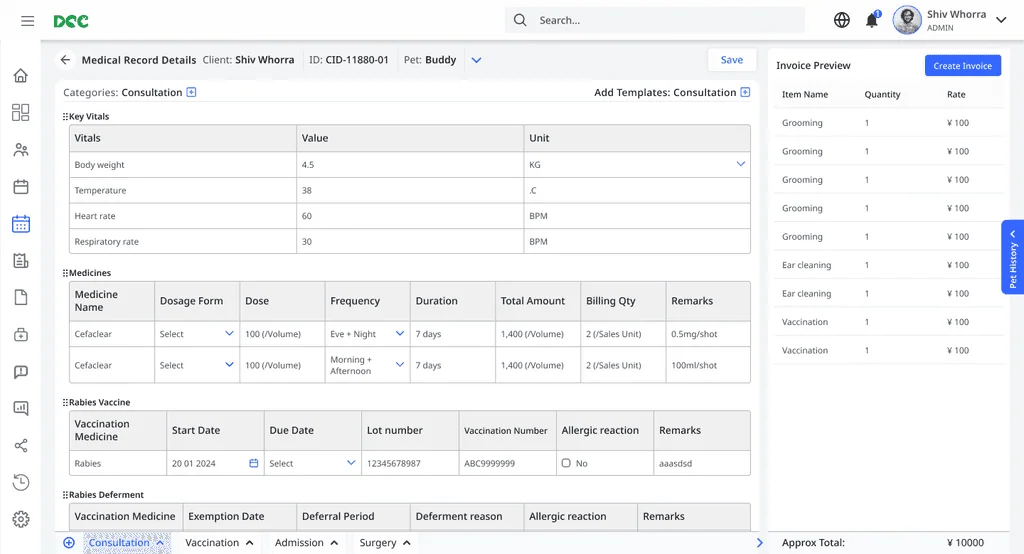
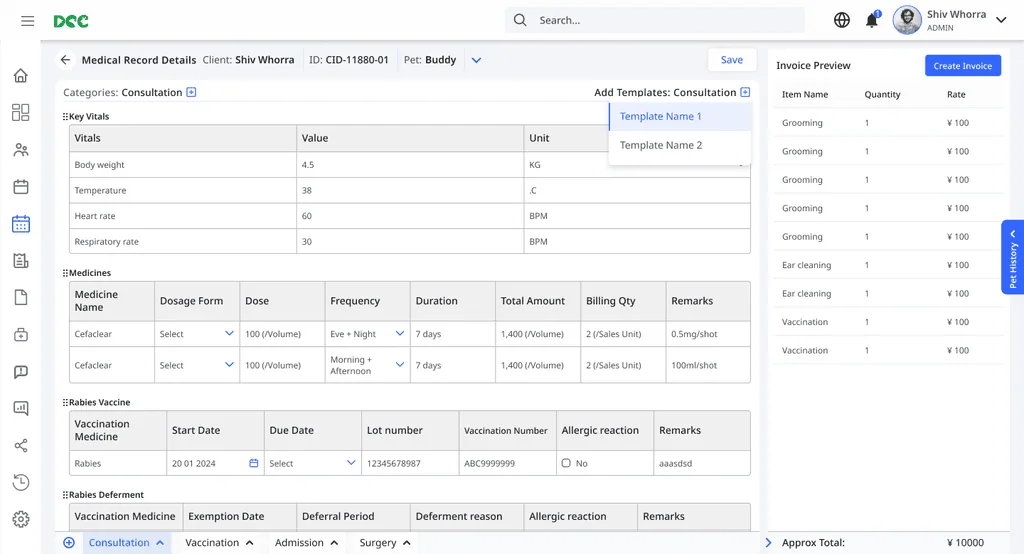
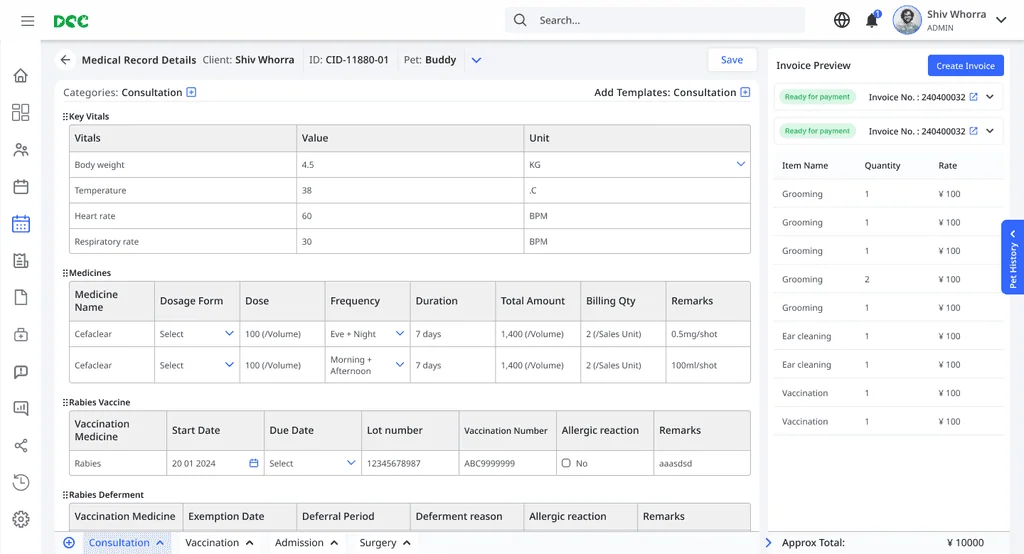
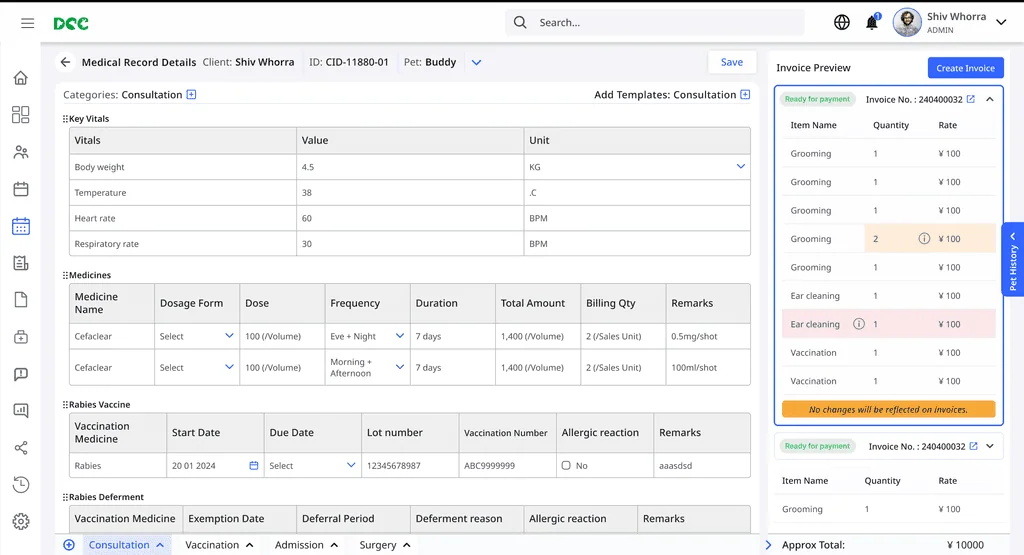
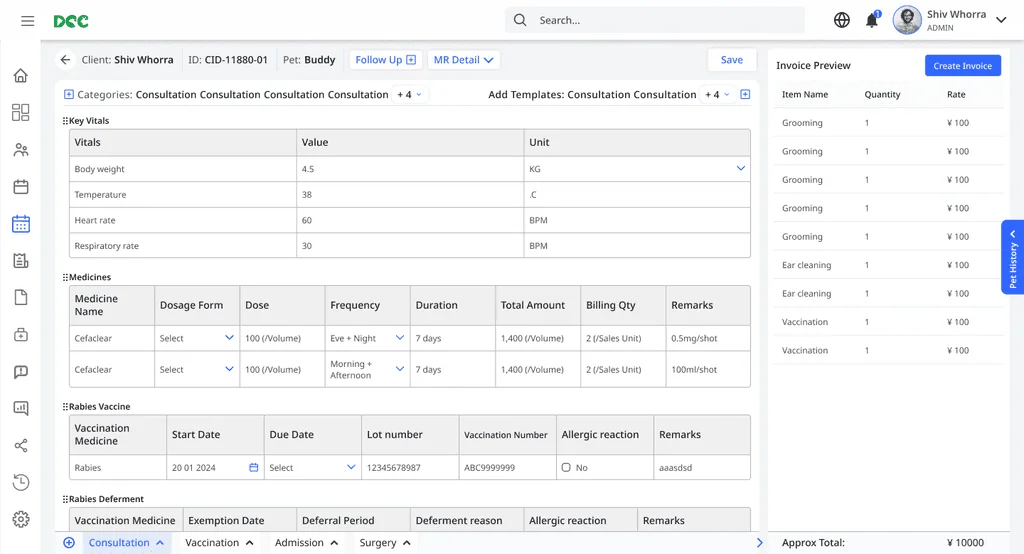
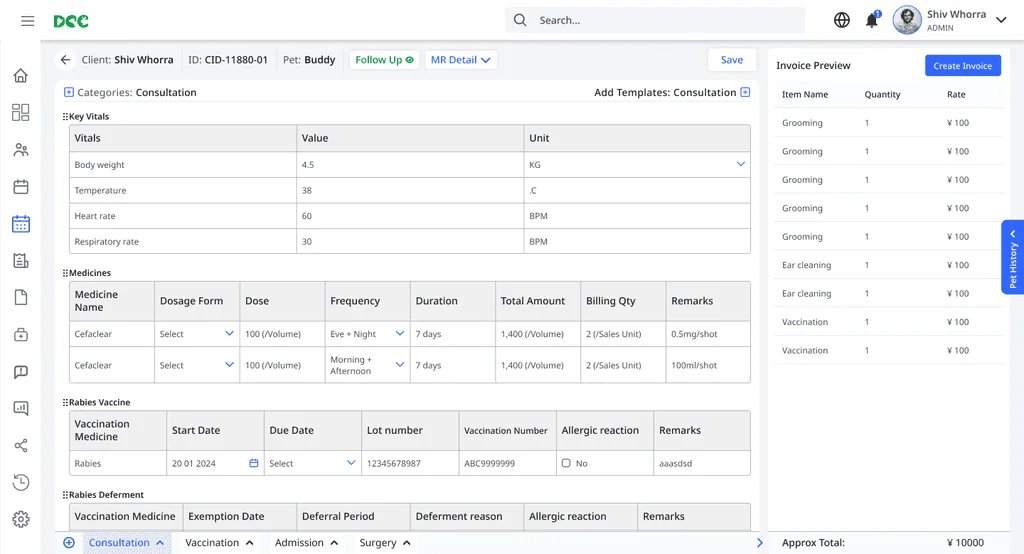
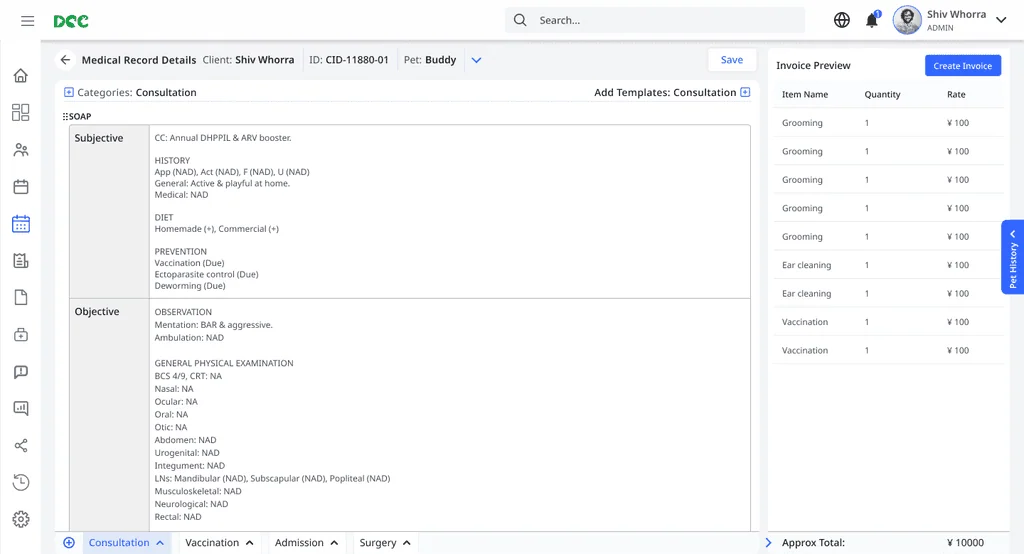
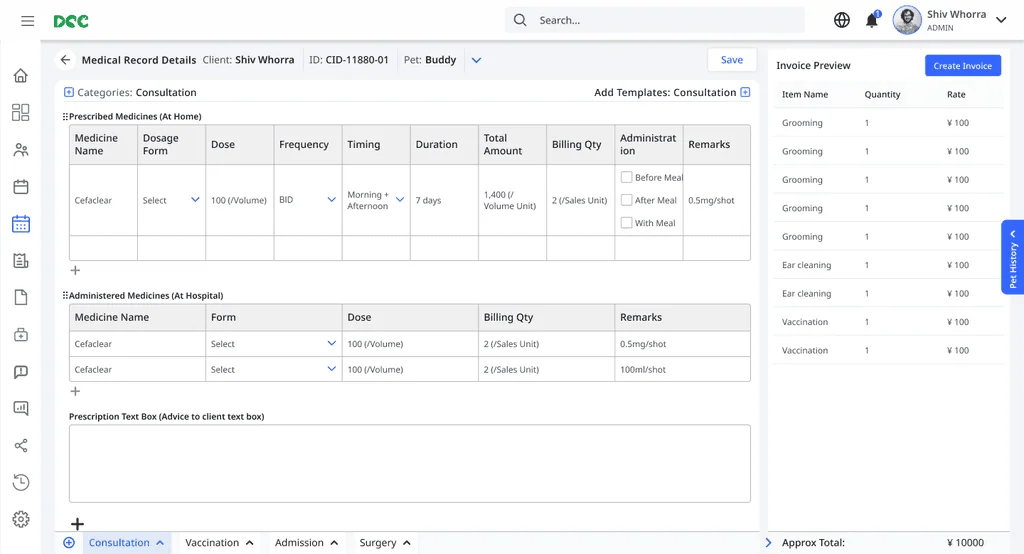
A Vet360 medical record built from blocks: vitals, medicines and a rabies vaccine, with the invoice preview filling in on the right
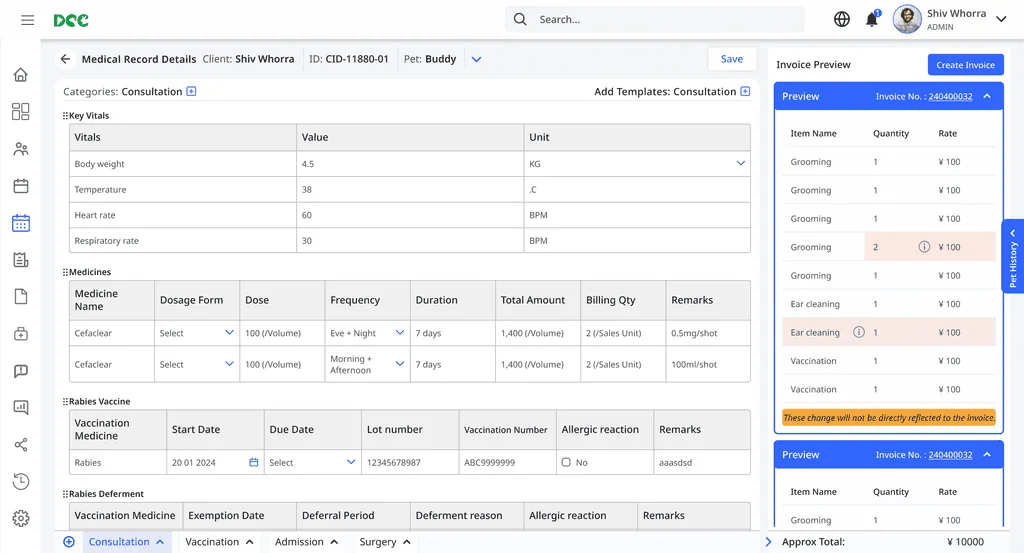
The record as blocks: vitals, medicines and vaccines, with the invoice filling itself in on the right.
Role
Product Designer, end to end
Company
A’alda Vet India
Scope
Vet360 medical records
Timeline
May 2024 – Oct 2024
  • 3.5 hrsa week back for each receptionist
  • 0overwrites in 60 days, across seven clinics
  • 91%of 23 surveyed users found the editor more intuitive
  • Problem

    One long fixed form, cut off from invoicing, labs and prescriptions, so staff typed the same details twice while a pet waited.

  • My role

    Product Designer, end to end: interviews with vets and staff, flows, high-fidelity UI, specs, and design reviews through the build.

  • What I did

    Rebuilt the record as blocks a vet can add and reorder, with templates, a live invoice preview, lab reports, and one editor at a time.

  • Outcome

    40% less time to create a record, 3.5 hours a week back per receptionist, and zero overwrites in 60 days across seven clinics.

Before and after

From one fixed form to a record shaped per visit

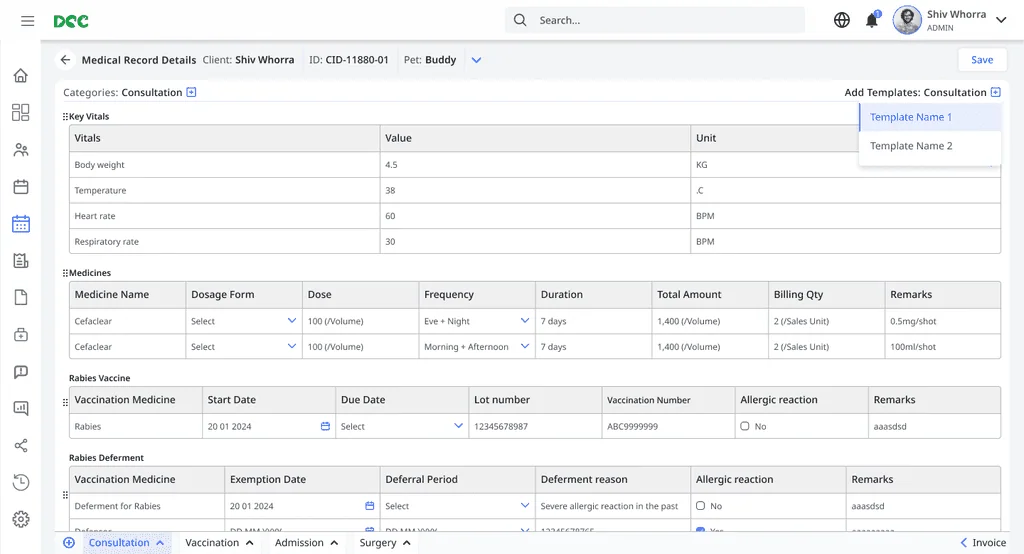
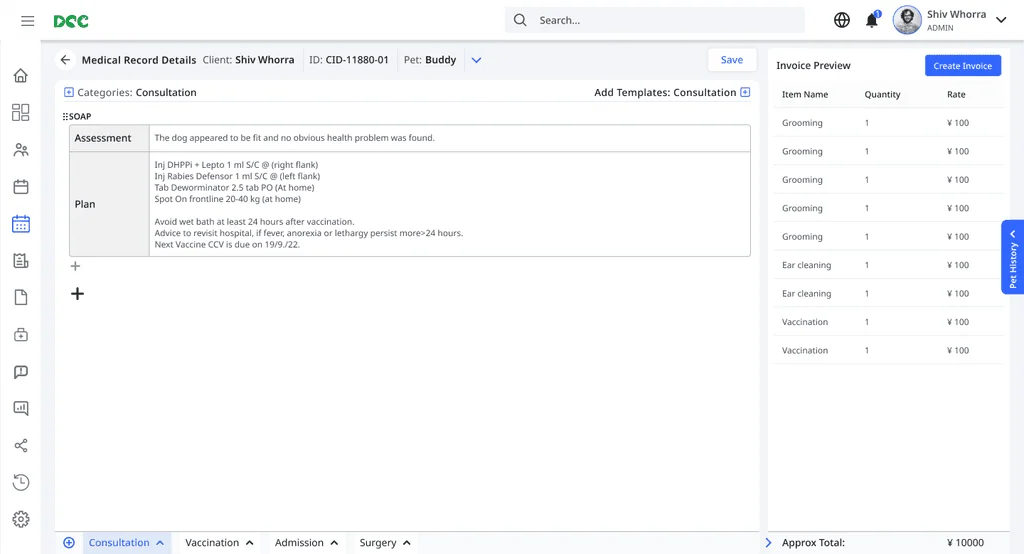
Before: one long fixed formAfter: blocks a vet arranges per visit
Long fixed forms, filled by handBlocks and templates, shaped per visit
Billing, labs and prescriptions typed twiceInvoice and lab reports fill from the record
One form for a surgery and a consultRecords tagged by visit type, with tabs
Two people could overwrite each otherOne editor at a time, others request
Past visits hard to findPast visits as timeline cards
What I designed

Eight features, at a glance

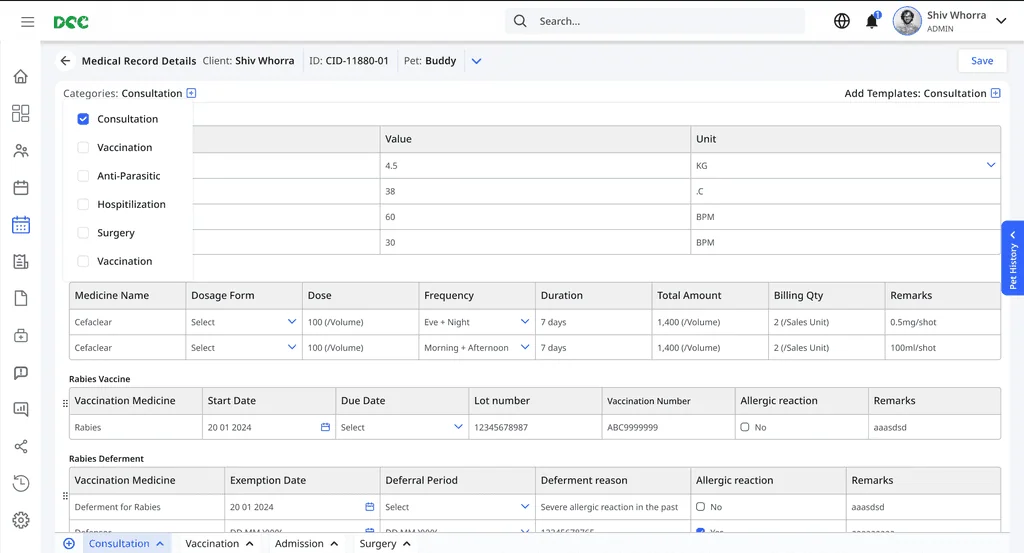
  • Record type picker: consultation, vaccination, anti-parasitic, hospitalisation, surgery

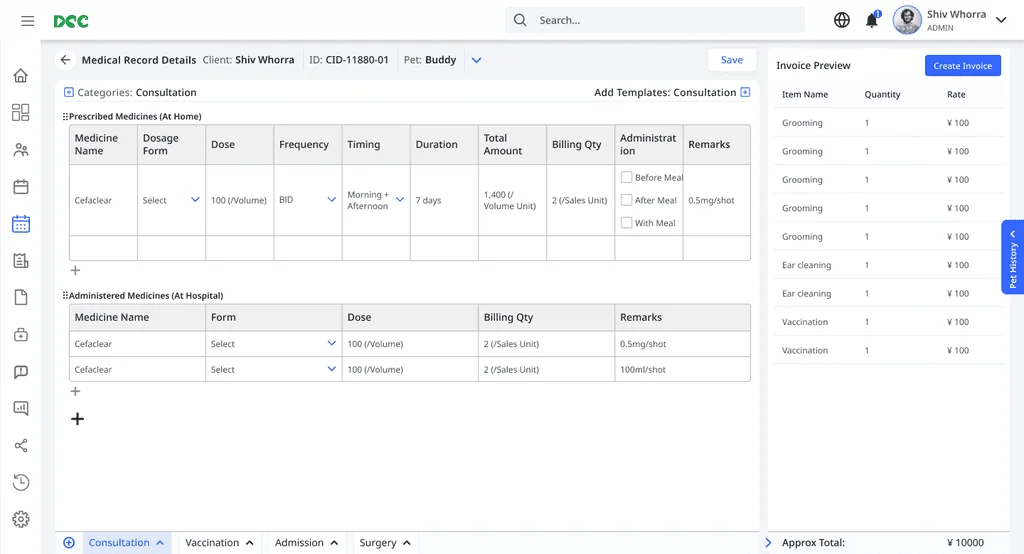
    Block editor

    Add, remove and reorder sections per visit, tagged by visit type.

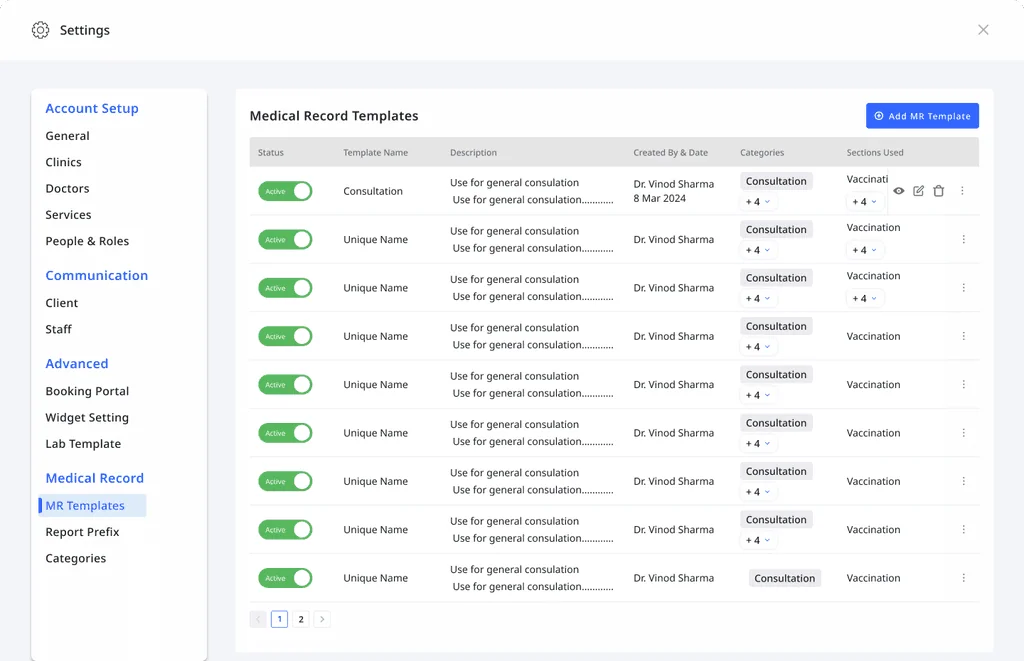
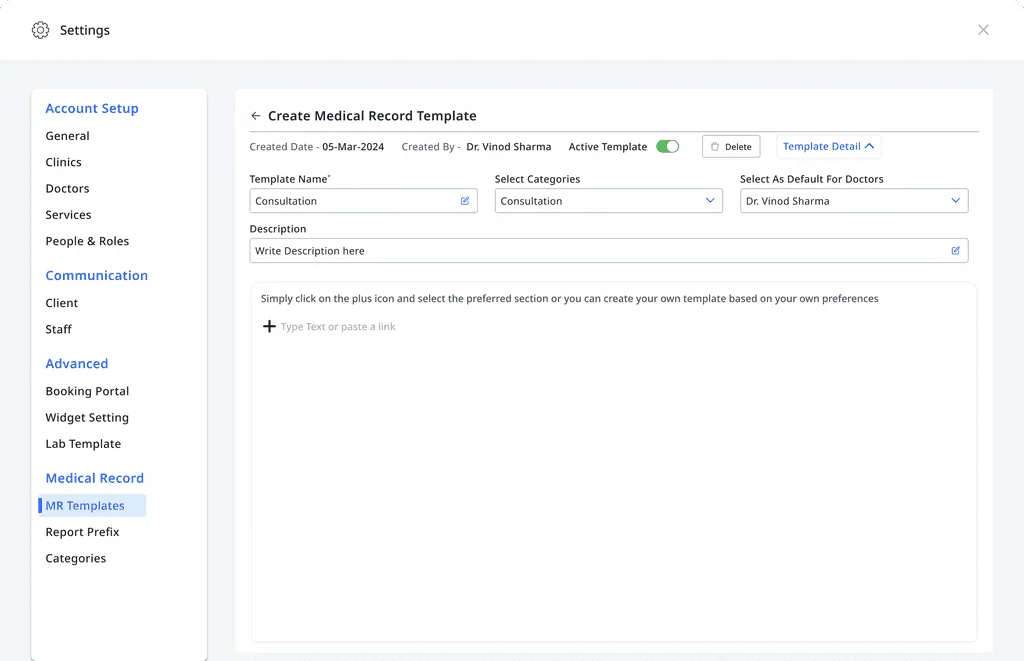
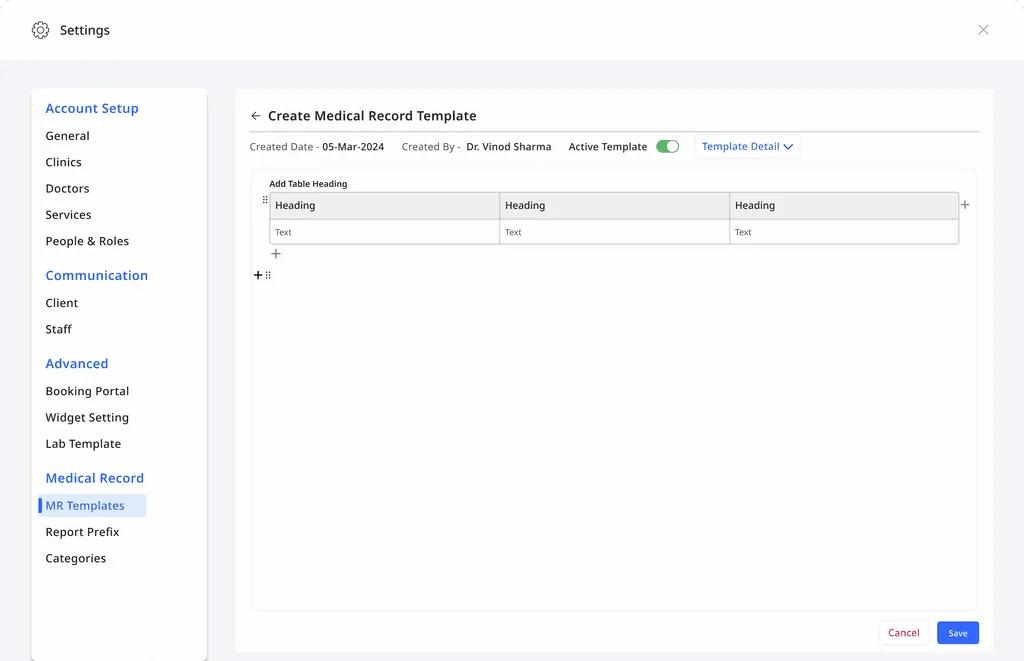
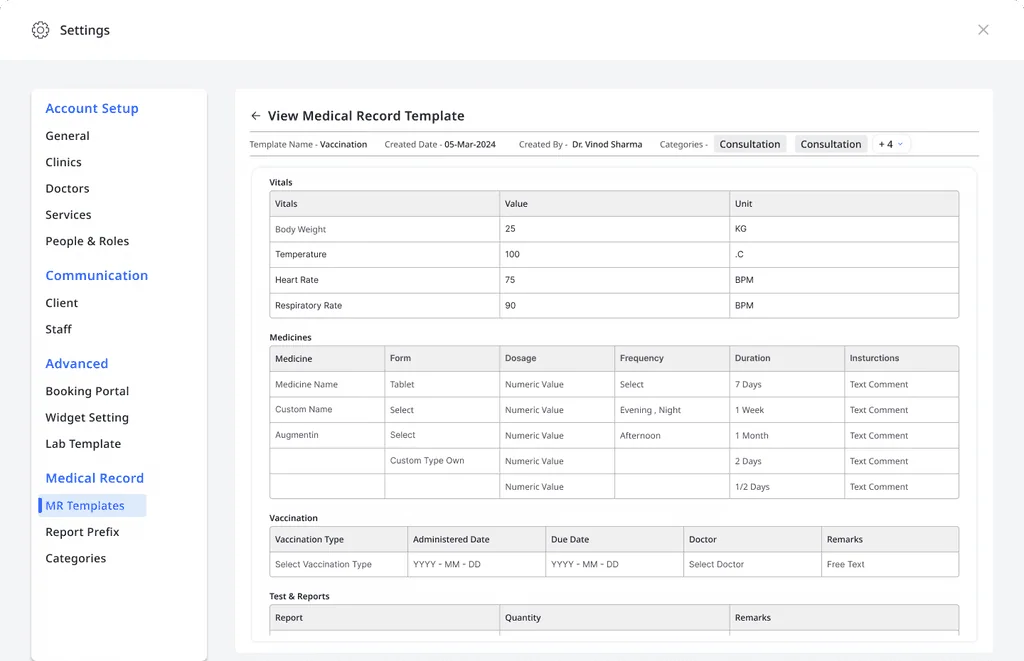
  • The clinic's list of medical record templates, each with an active toggle

    Templates

    Load a pre-set record for common visits. Each clinic manages its own.

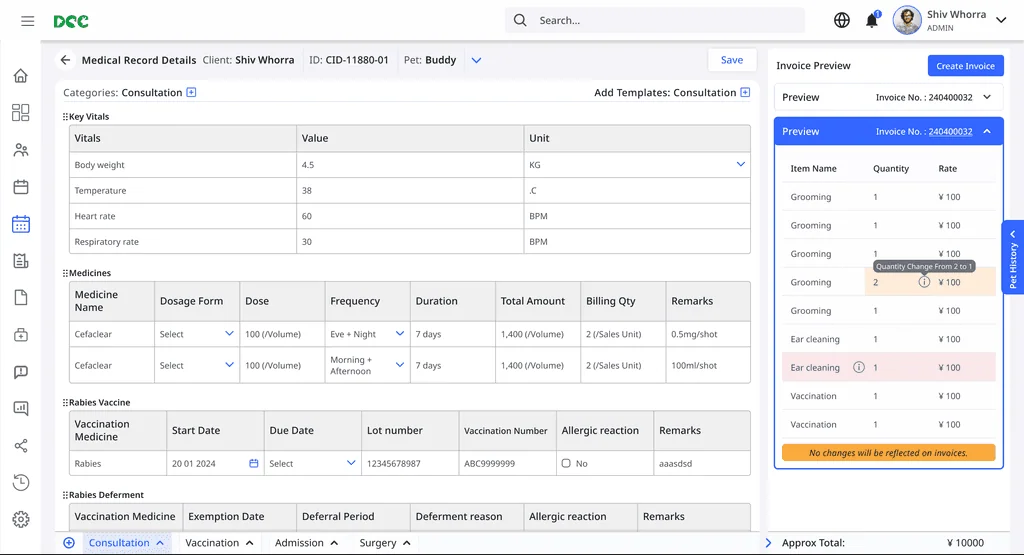
  • Invoice preview beside the record, flagging a changed quantity

    Live invoice

    Medicines, procedures and tests fill the invoice as the vet writes.

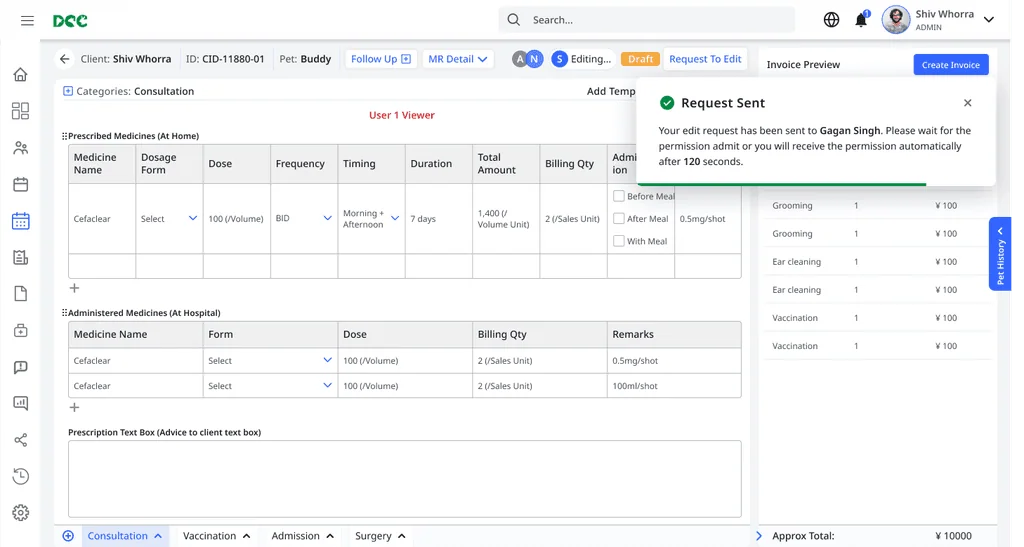
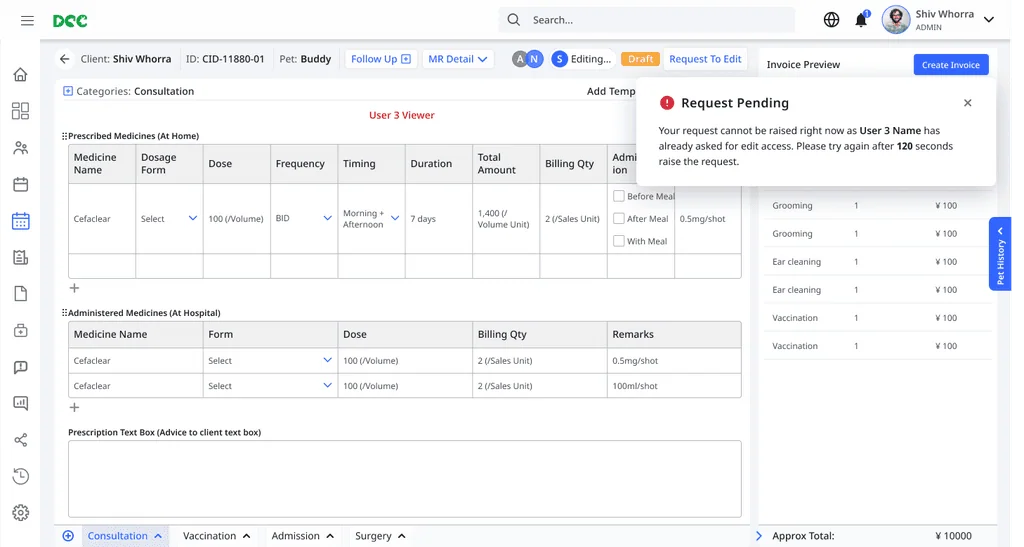
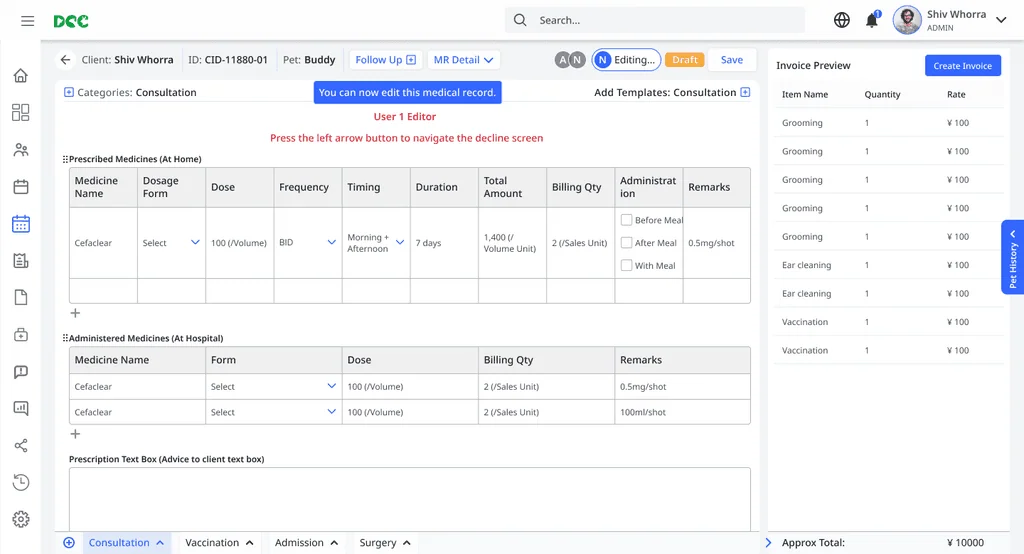
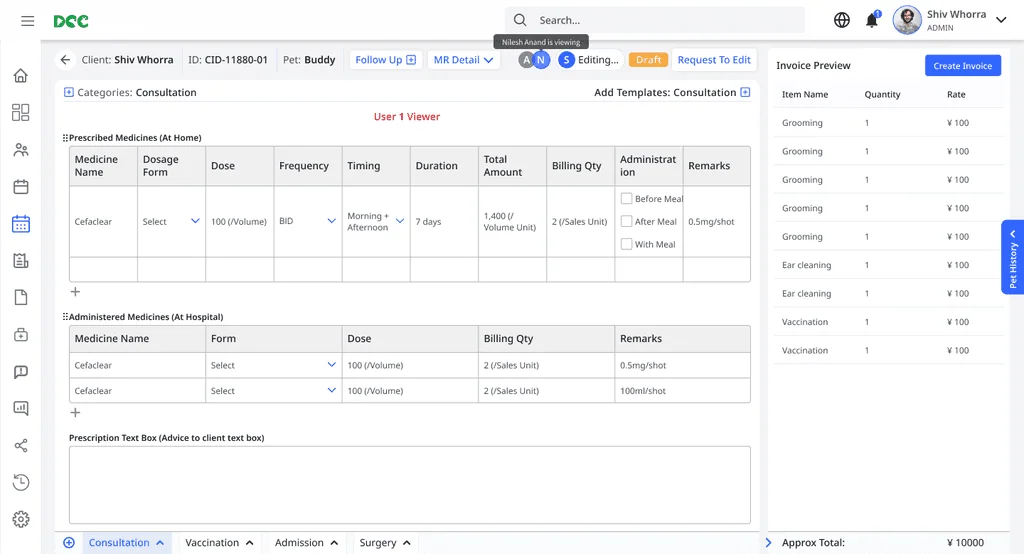
  • A viewer's Request to Edit, confirmed as sent, with who is editing shown at the top

    One editor at a time

    Everyone else views, and can request to edit.

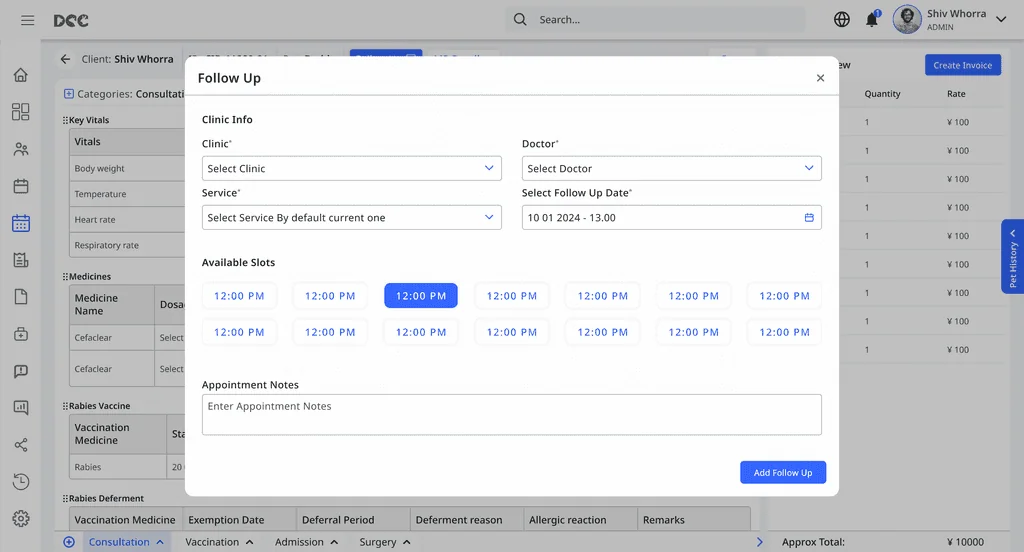
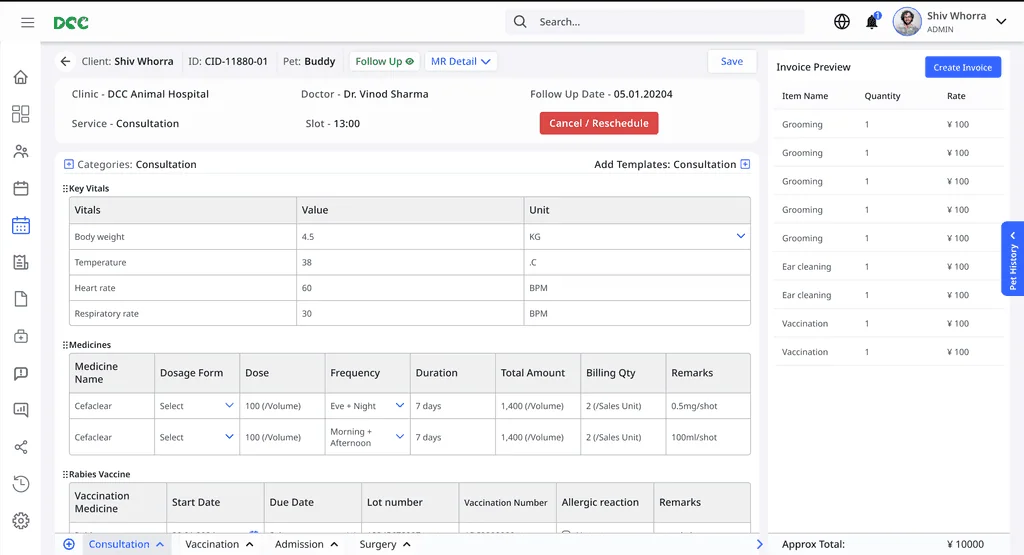
  • Follow-up modal with clinic, doctor, date and available slots

    Follow-ups

    Booked from inside the record, with client, pet and doctor filled in.

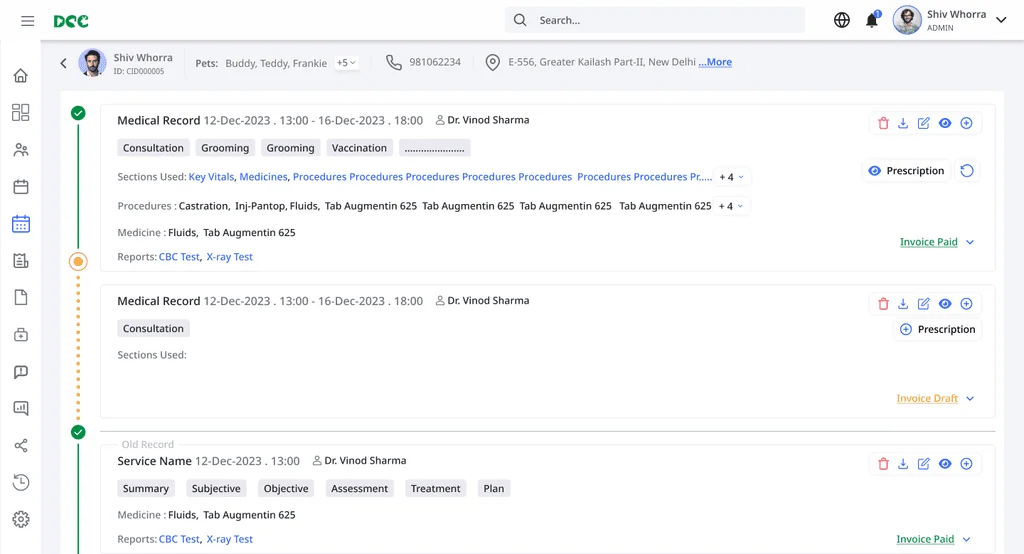
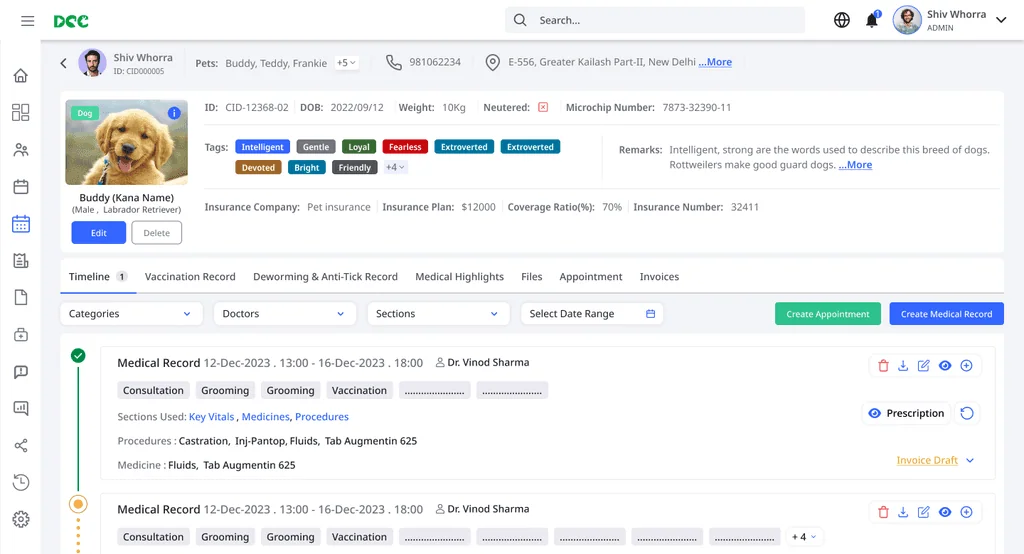
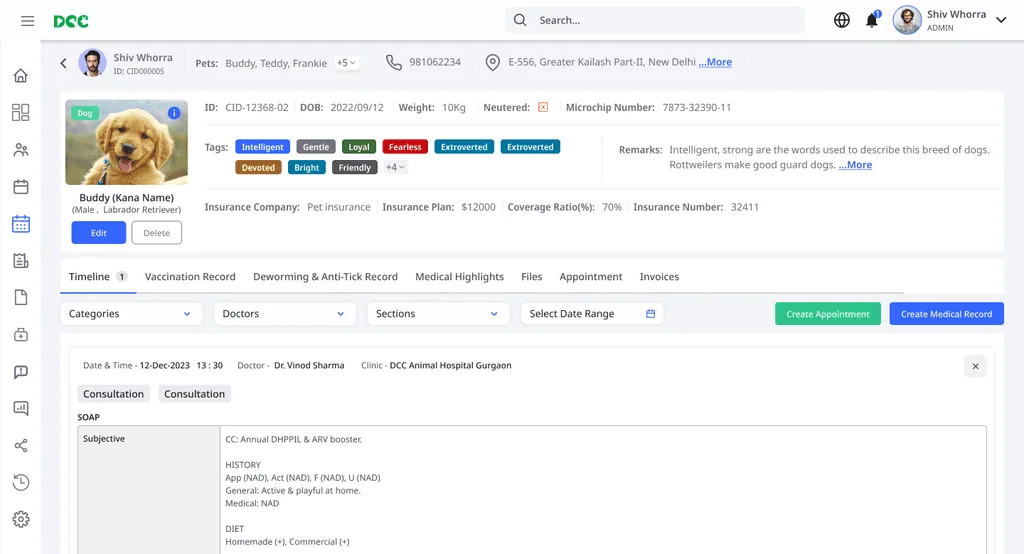
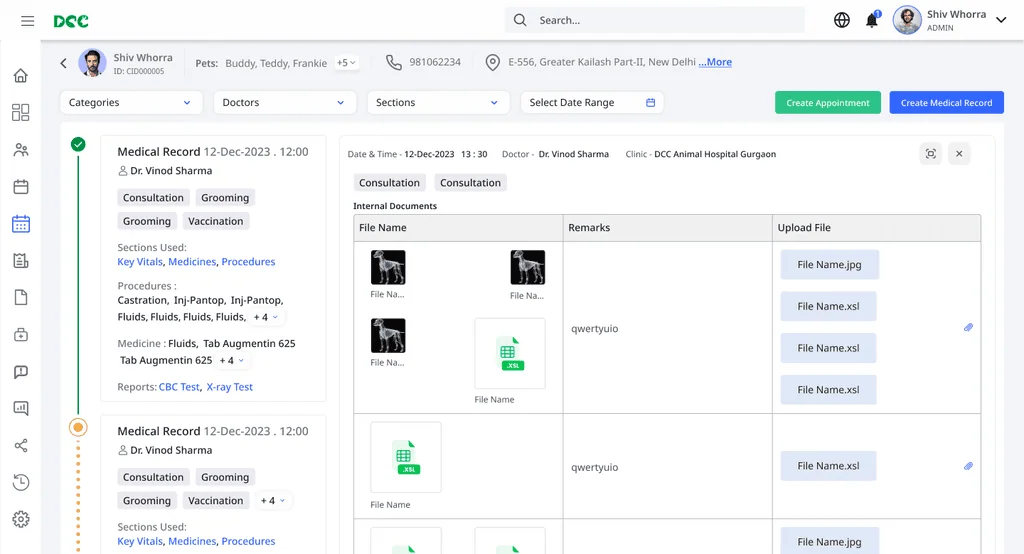
  • Visit timeline as cards, with an old SOAP record in the same list

    Timeline

    Past visits as cards, old SOAP notes included.

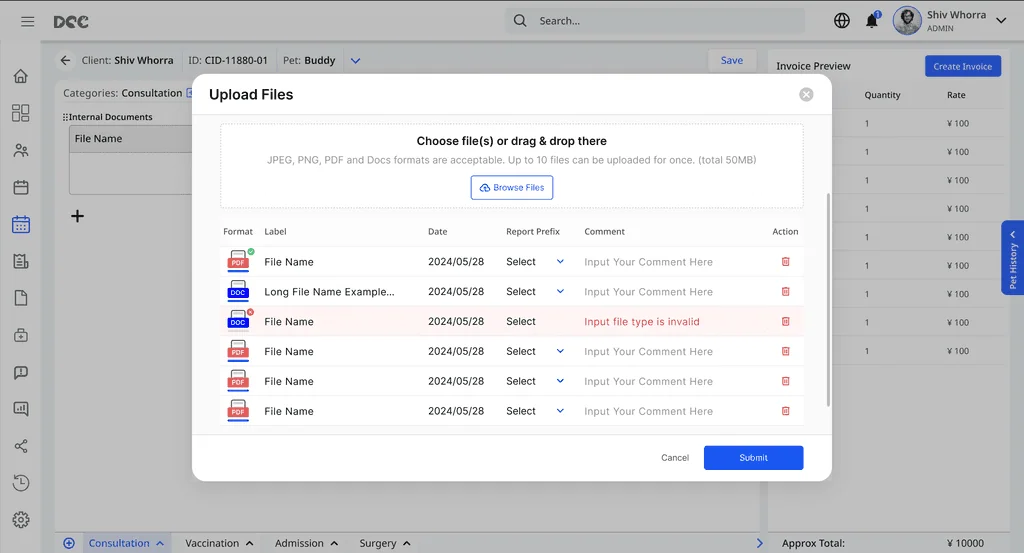
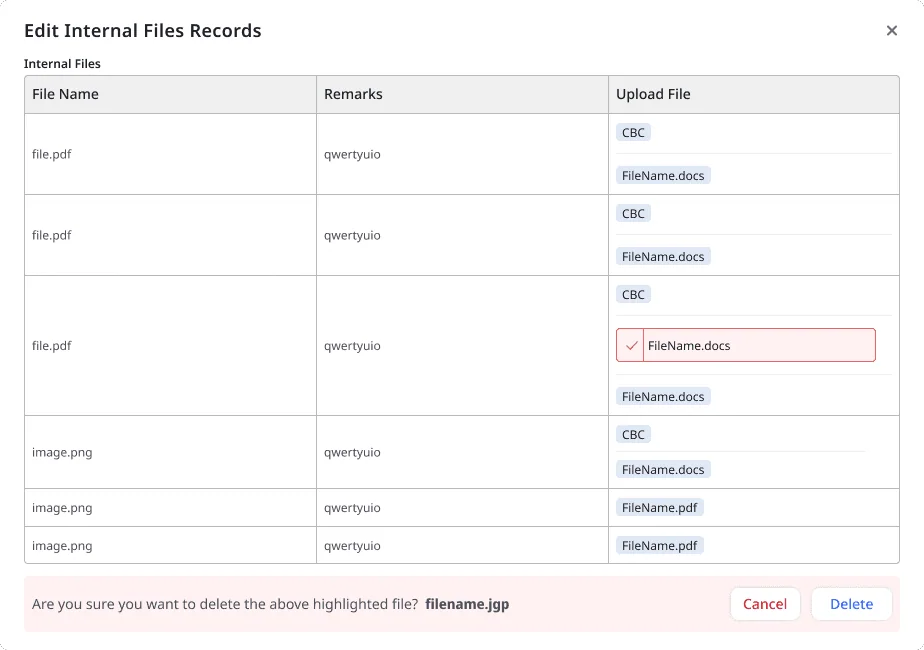
  • Upload dialog for lab files, flagging one invalid file type

    Lab reports

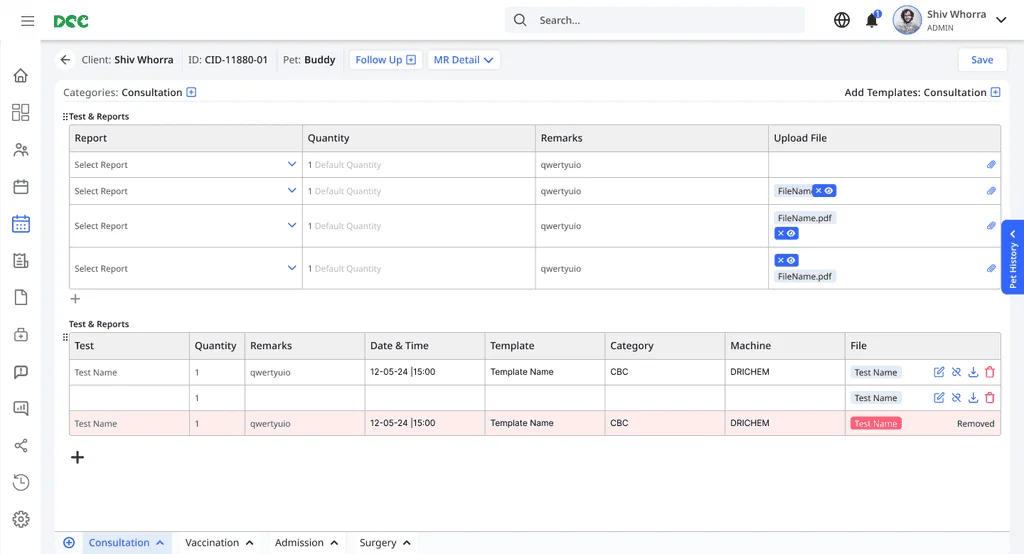
    From LabLink or uploaded: PDFs, images and video, inside the record.

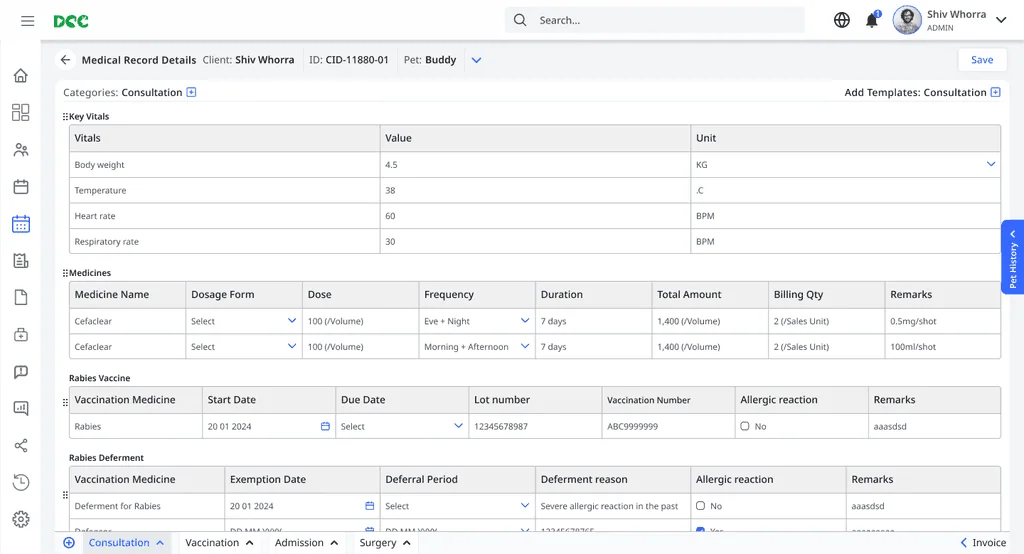
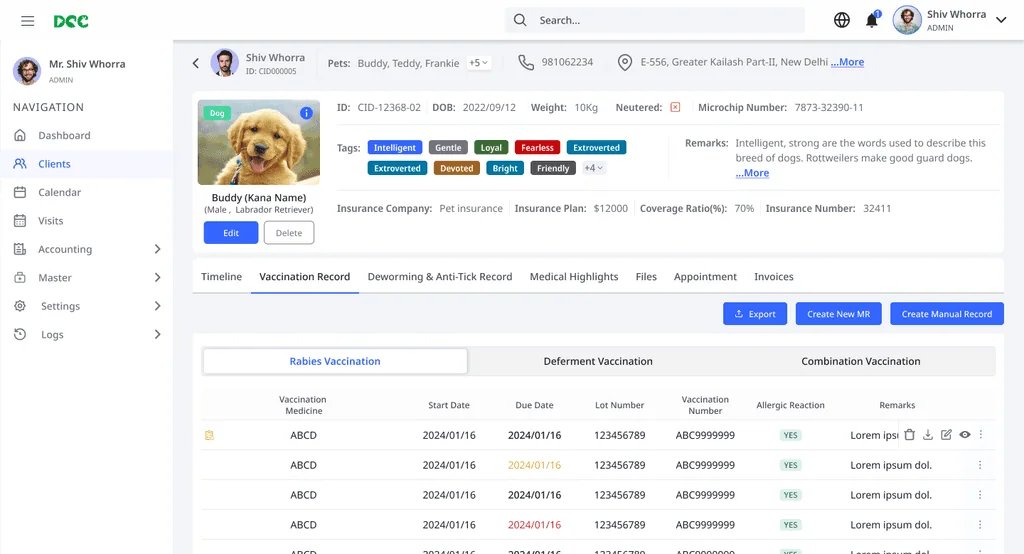
  • Rabies vaccine and rabies deferment tables inside the record

    Medicines and vaccines

    Dose and duration as fields, billed automatically, rabies deferment handled.

Decisions

The call I had to make

How two people share one record

Chose A single active editor, with everyone else a viewer and a Request to Edit button, plus status indicators showing who holds the record.
Instead of Real-time co-editing on the Google Docs model.
Why A clinical record cannot absorb a silent overwrite. An explicit lock makes the state of the record unambiguous to everyone looking at it. Co-editing stayed on the roadmap as a later phase rather than a launch requirement.
Held up Zero overwrites in the first 60 days, across seven clinics.

Full story

That's the short version. Below: my role, the process, all eight features with their screens, the impact and what I learned.

My role

What I owned

  • The design ran end to end through me, from the first interview to the review after release.
  • Interviewed veterinarians and stakeholders about how the existing record behaved in a real consult.
  • Pulled apart Notion, Google Docs and Excel, because a modular record is a documentation problem before it is a medical one.
  • Wireframes, prototypes and high-fidelity UI in Figma.
  • Specs to engineering through Jira and Notion.
  • Worked the implementation problems out with the PMs and developers rather than handing over and leaving.
  • Ran design reviews and reworked what the feedback showed was wrong.
Design process

How the redesign ran

1. Discovery and research

Interviews with doctors, paravets and admin staff, then the workflows mapped out to find where the existing record cost them time.

2. Competitor benchmarking

Flexible documentation tools, read for how they let a page change shape without losing structure. A medical record has to do both.

3. Ideation and wireframing

Several directions drawn out, tested against the same three questions: can a vet change it, does it connect to billing and labs, is it faster than the old form.

4. Prototyping and testing

Interactive prototypes, put in front of the people who would use them.

5. Collaboration and delivery

Component libraries and design guidelines to engineering, then reviews right through the build.

Feature breakdown

Eight features, problem and solution

Open all eight features: the problem, the solution and the screens for each 8 features · about 5 min

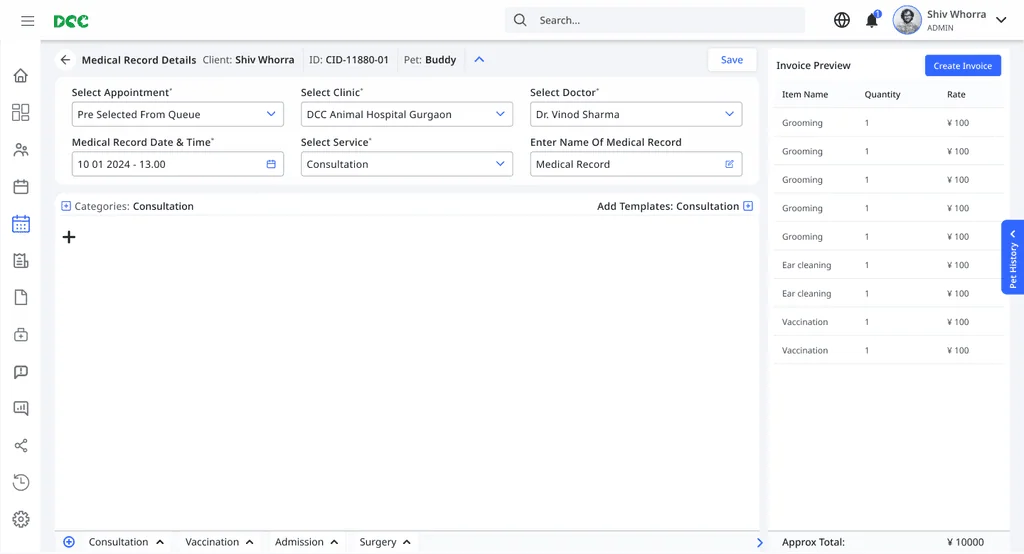
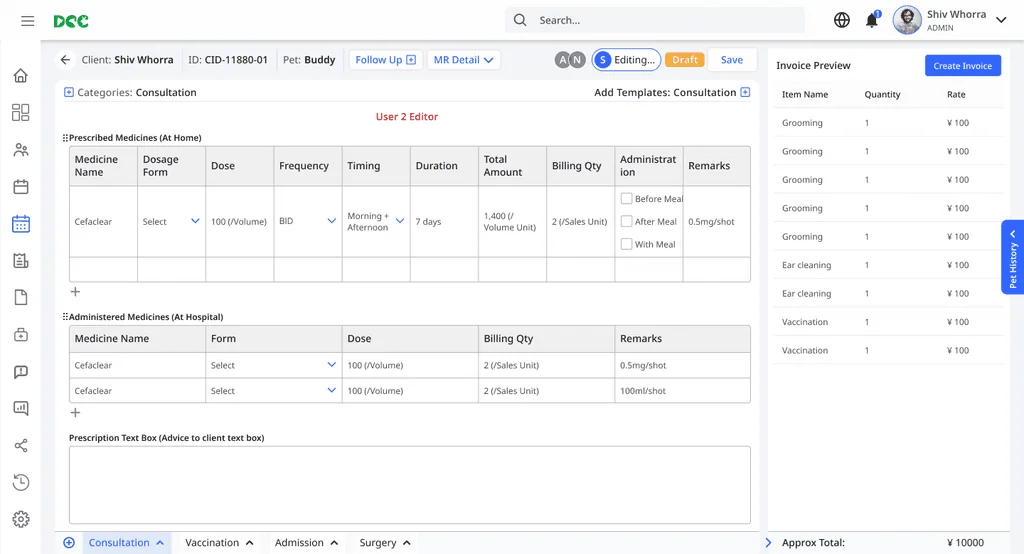
01Flexible Medical Record Editor

Problem: Vets were stuck with rigid forms that didn't adapt to different types of visits.

Solution: Designed a block-based editor using Editor.js where users could:

  • Add or remove sections like Vitals, Procedures, Medicines.
  • Use multiple tabs for complex visits.
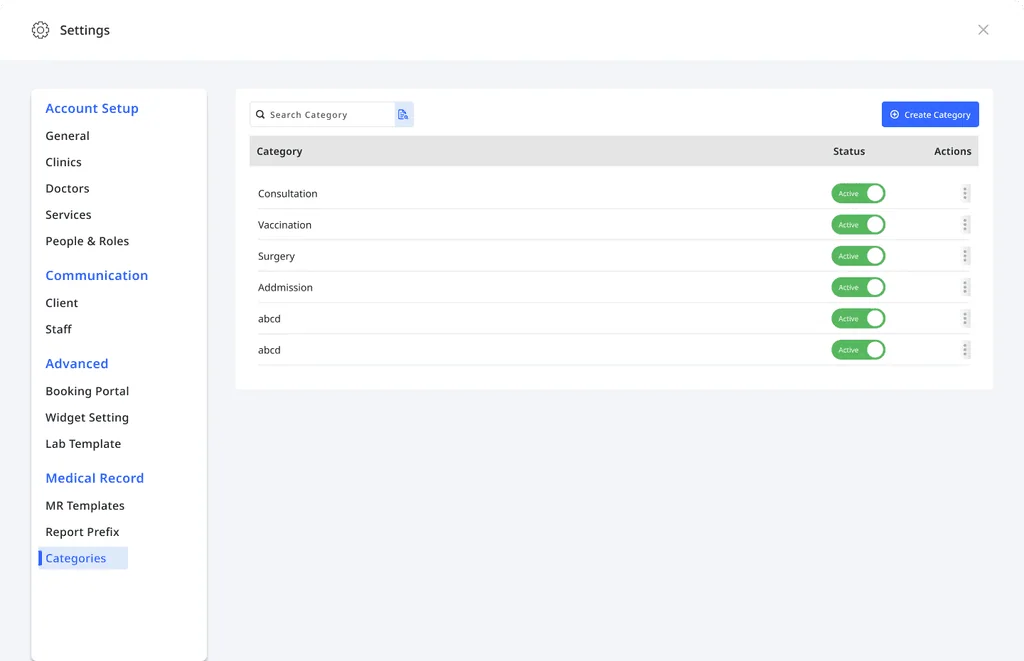
  • Tag a record by type: consultation, surgery, and so on.

Key Screens:

  • MR Editor Interface
  • Categories Selection

02Template Management

Problem: The same procedure meant typing the same record again.

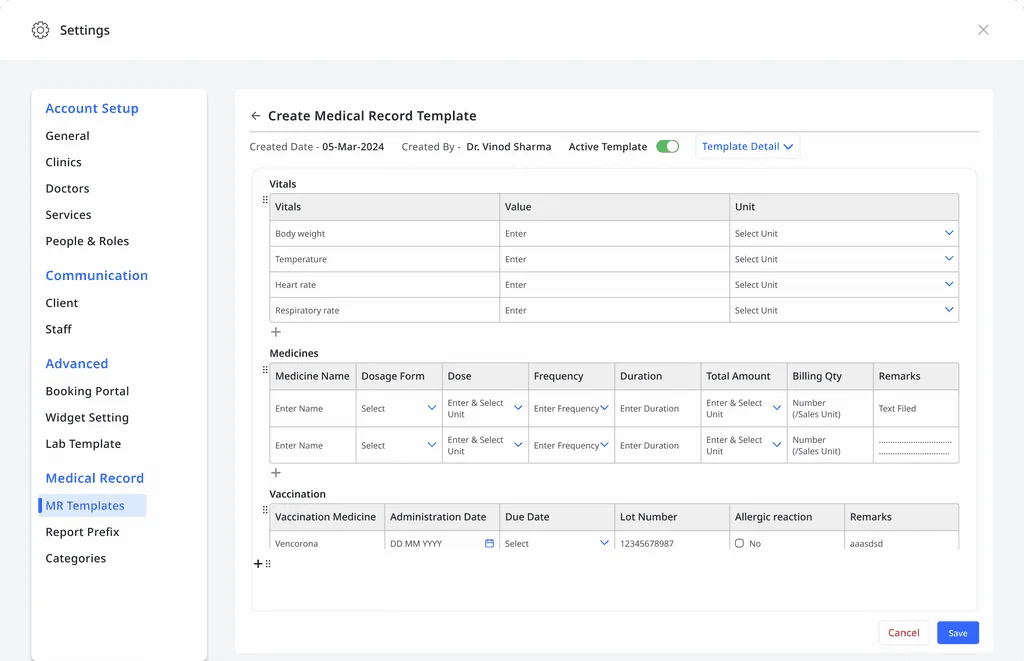
Solution: Editable templates for the visit types a clinic sees most:

  • Quick loading of pre-set structures.
  • A settings panel where a hospital manages its own templates.

Key Screens:

  • Template List
  • Template Edit Screen
  • Category Settings

03Invoice Integration

Problem: Invoices were typed by hand from the record, which was slow and got things wrong.

Solution: A live invoice preview tied to what is in the record:

  • Medicines, procedures, and tests auto-populate the invoice.
  • A preview never looks like a finalised invoice.

Key Screens:

  • Invoice Preview
  • Final Invoice State

04Multi-User Editing & Conflict Resolution

Problem: Clinics needed multiple users on one record, but simultaneous editing risked conflicts and overwrites.

Solution: I designed a controlled collaboration process:

  • One active editor at a time.
  • Everyone else on the record is a viewer.
  • A Request to Edit button, so a viewer is never stuck.
  • Status indicators and notifications, so each person can see who holds the record.

Key Screens:

  • Edit Request Modal
  • Viewer/Editor Status Display

Impact: No edit collided with another one, and a clinic could still work the record as a team.

05Follow-Up Appointment Flow

Problem: Vets had to rely on reception for scheduling follow-ups.

Solution: A follow-up modal inside the record itself:

  • Client, pet and doctor already filled in.
  • Calendar and time-slot selection.

Key Screens:

  • Follow-Up Appointment Modal

06Timeline Revamp & Legacy SOAP Integration

Problem: Past visits were hard to find, and the old SOAP notes sat outside the new record entirely.

Solution: The timeline, rebuilt:

  • Cards, so a visit is one glance rather than one search.
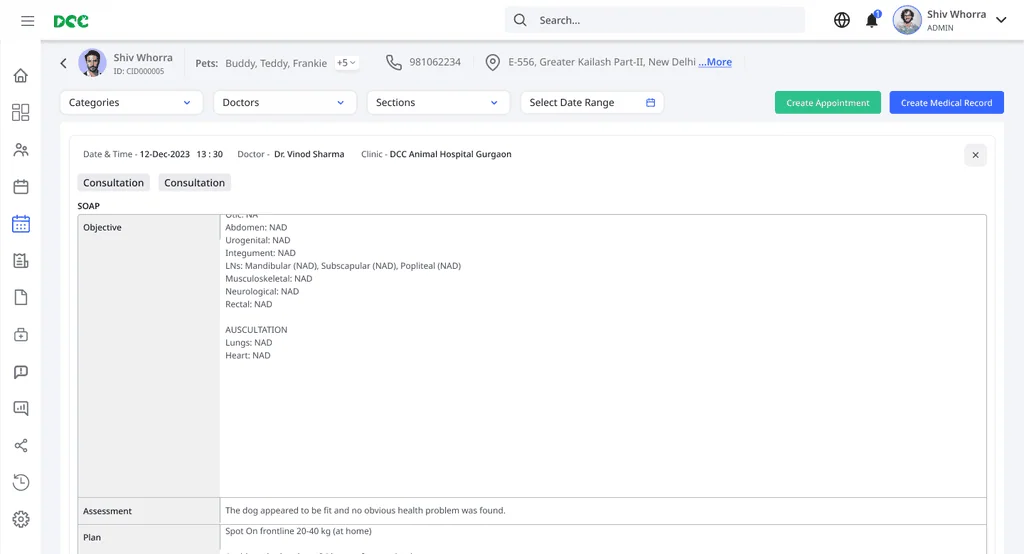
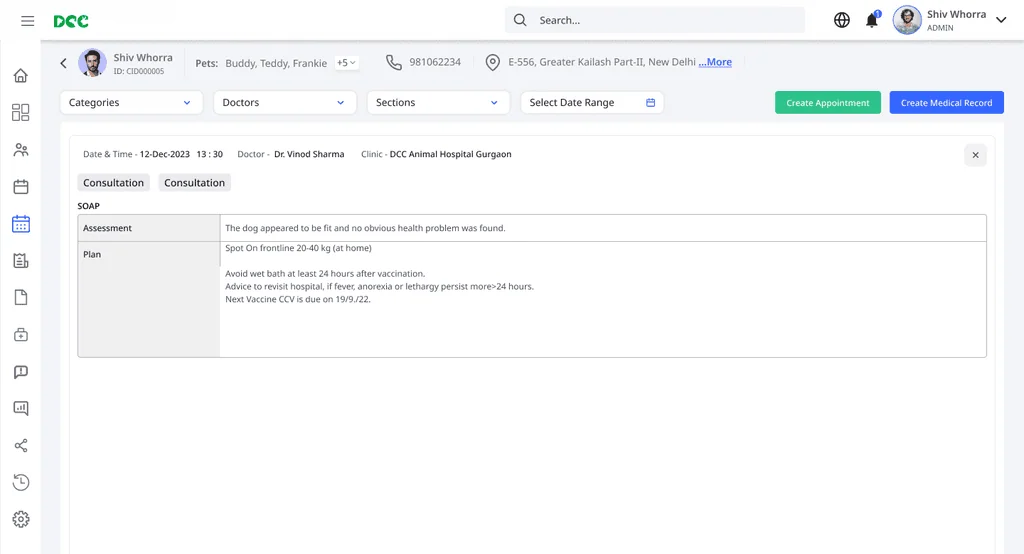
  • Integrated both the new medical record and legacy SOAP formats.
  • Enabled copy-paste from past records.

Key Screens:

  • Timeline View
  • SOAP Section
  • Old Visit Preview

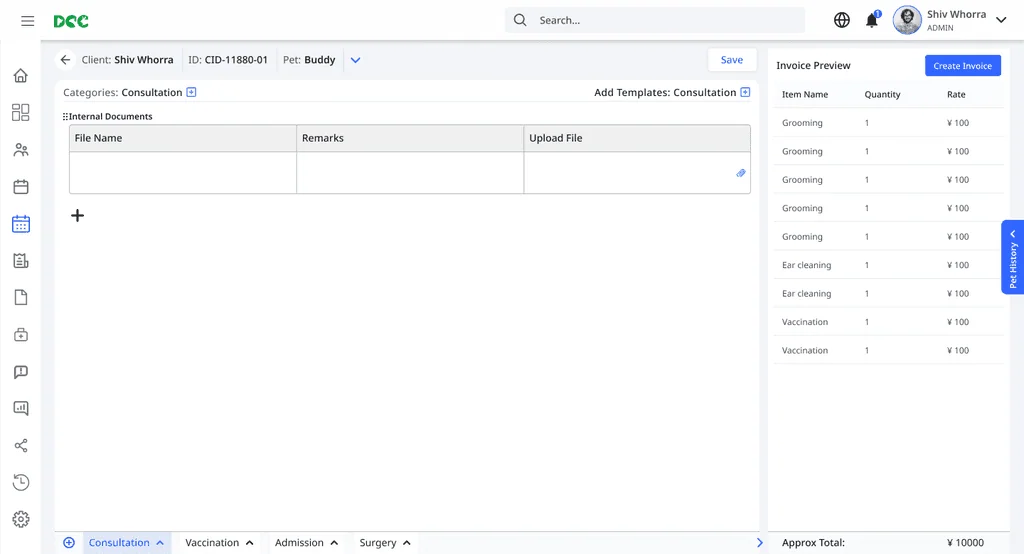
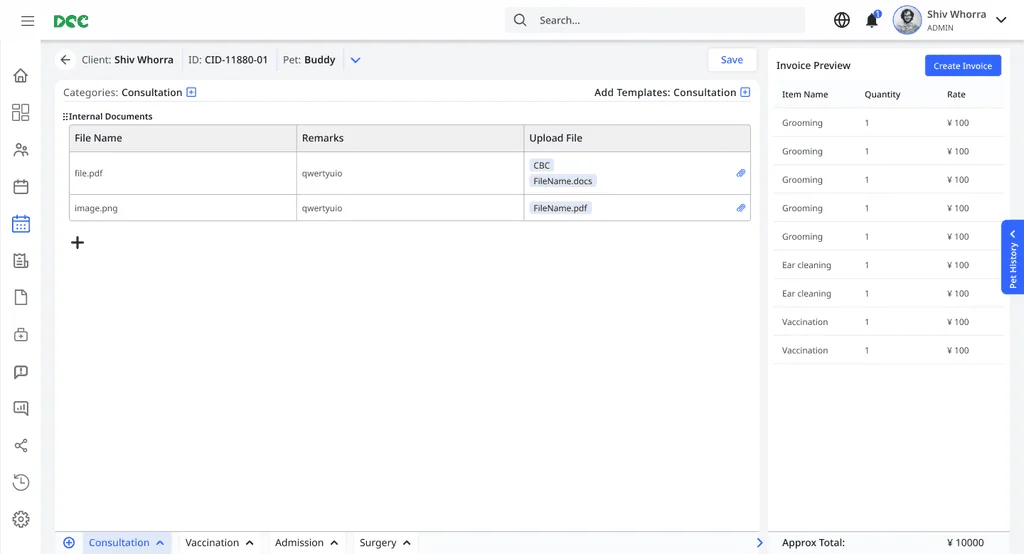
07Lab Reports & Attachments

Problem: Lab reports were disconnected from patient records.

Solution: Lab reports pulled into the record:

  • LabLink integration, plus manual upload where a lab is not connected.
  • PDFs, images and video all accepted.
  • Reports managed inside the record itself.

Key Screens:

  • Test & Reports Section
  • Internal Documents Upload

08Medicines, Vaccinations & Anti-Parasitic Management

Problem: Dosages and vaccination schedules were easy to get wrong, and getting them wrong matters here.

Solution: Structured entry, tied to billing:

  • Set dosage, duration and billing quantity as fields, not free text.
  • Every entry lands on the invoice automatically.
  • Deferment handled for rabies compliance.

Key Screens:

  • Medicines Section
  • Vaccination Tables
  • Deferment Screen
Future scope

What comes next

  • Auto-save and real-time collaboration: the Google Docs model, in a later phase.
  • PDF export: for the record, prescriptions and lab reports.
  • Reminders: automated notifications for follow-ups and vaccinations.
Impact

What changed after rollout

40%
Less time to create a medical record
Blocks and templates in place of the long fixed form
3.5 hours
Saved weekly per receptionist
Billing and lab reports stopped being re-entered by hand
  • No editing conflicts reported post-launch
    Viewer and editor roles plus the request-to-edit flow meant zero overwrites in the first 60 days, across seven clinics.
  • Lab report access time reduced by 50%
    With LabLink integration, the average time to retrieve a lab report from the medical record decreased from 35–40 seconds to 15–18 seconds. This was confirmed during clinician onboarding sessions.
  • 91% found the new editor more intuitive
    An internal survey conducted with 23 users across six clinics showed:
    • 87% reported the workflow was better aligned with their daily practice.
    • 83% noted significant improvement in accessing past visit data via the new timeline.
What I learned

What the project taught me

Clarity is the hard part in a complex system

Medical data, multi-role workflows and compliance rules all live on one screen. The work was keeping the depth a clinical team needs while staying readable mid-consult, and most of that came down to what shows by default.

Structured flexibility is a real constraint

Two opposite things had to fit: structured medical data and free-form writing. Editor.js let the record be modular without letting a vet break the clinical structure underneath it.

Handing off is not finishing

The version that ships is decided during the build, not in the Figma file. Staying with the PMs and developers through implementation kept the shipped record close to the intent, and taught me to argue for a design in terms of what it costs to build.

Real feedback beats assumptions

Some early ideas were cut back once I watched frontline staff use them. Testing caught things no amount of reasoning about the flow would have.

Small details, operational results

The request-to-edit flow, the live viewer state and the invoice preview are small decisions on their own. Together they are 3.5 hours a week back for a receptionist.

Conclusion

Where it landed

The record went from one fixed form to blocks a vet arranges per visit, with invoicing, lab reports and follow-ups attached. Seven clinics were on it inside 60 days and nobody lost work to an overwrite. Of 23 users surveyed afterwards, 91% found the new editor easier to work in.

Collaboration

  • Controlled access stopped clinics overwriting each other.

User feedback

  • The flexibility and the ease of use are what users named.

Care

  • Past visits are quicker to reach, which shows up in the treatment.