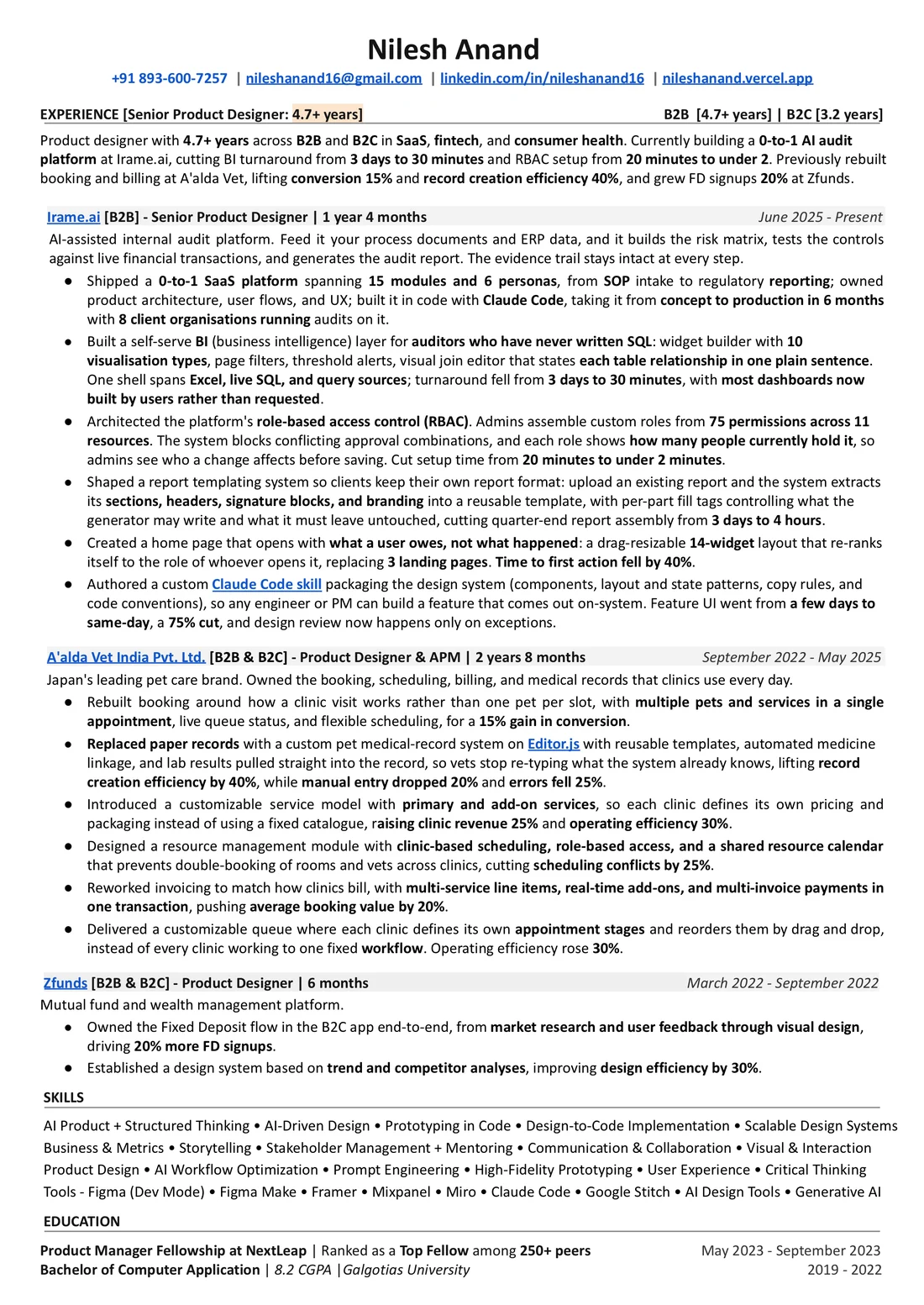
The problem
Top challenges faced by users
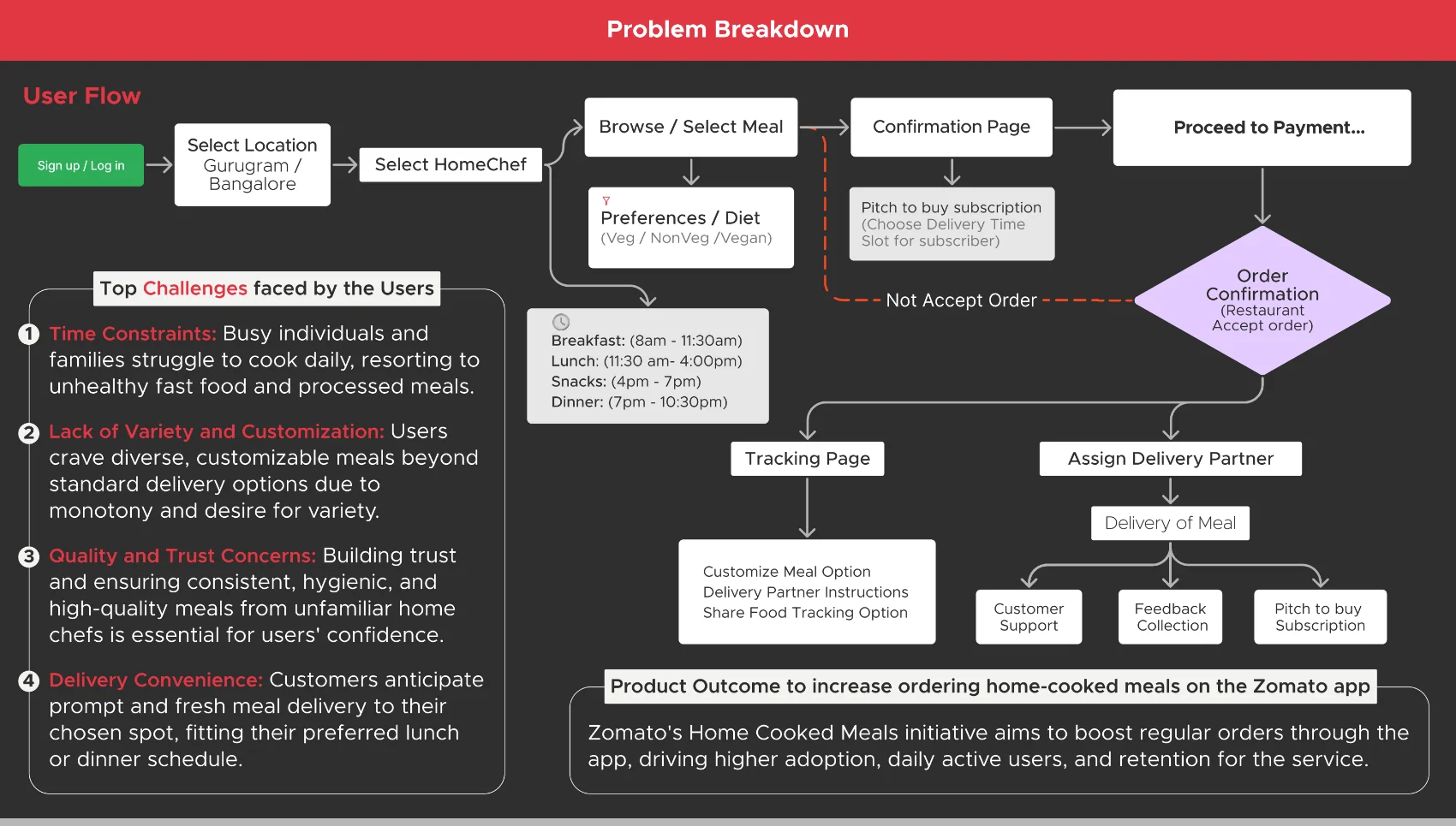
- Time constraints: Busy individuals and families fall back on fast food and processed meals because they cannot cook daily.
- Lack of variety and customisation: Users want more choice than standard delivery offers, and want to change what arrives.
- Quality and trust: People need to believe that meals from a home chef they have never met will be consistent and hygienic.
- Delivery convenience: Customers expect a prompt, fresh delivery on their own lunch or dinner schedule.
The true problem: “Difficulty in accessing convenient and reliable daily home-cooked meals.” People cannot find the time to cook, so they eat worse and lean on fast food.
Validating the problem
Evidence before building
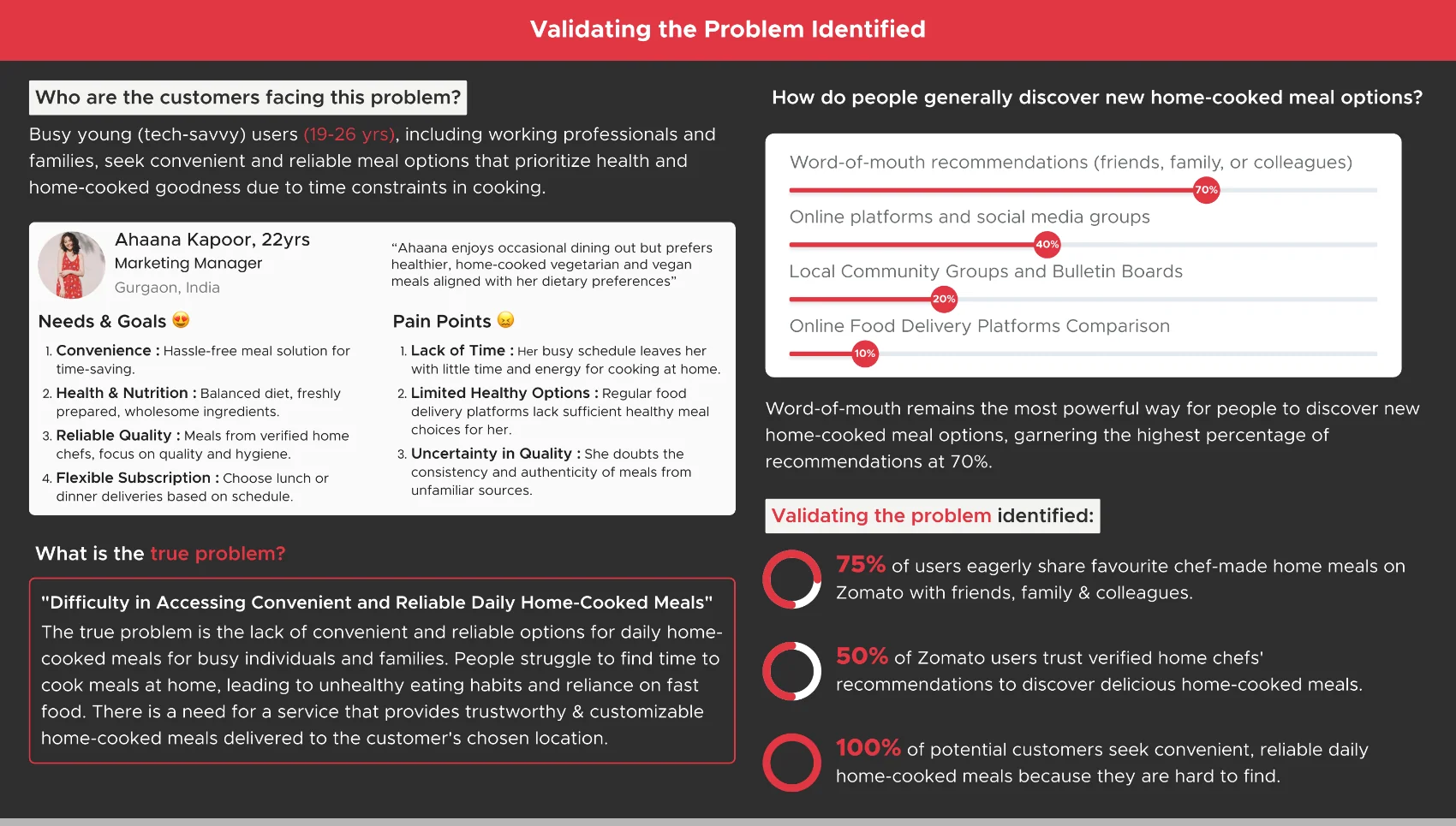
Primary target: busy, tech-savvy users aged 19 to 26, working professionals and families who want healthy home-cooked food and have no time to make it. The persona is Ahaana Kapoor, 22, a Gurgaon marketing manager who eats vegetarian and vegan and wants meals that match her diet.
- 70% of users find new home-cooked options through word of mouth, the strongest channel by some way.
- 75% would share a favourite chef-made meal on Zomato with friends and family.
- 50% trust verified home chefs' recommendations when looking for something to eat.
- Every respondent in the survey wanted convenient, reliable daily home-cooked meals.
Solution and prioritisation
Ideating and choosing the MVP
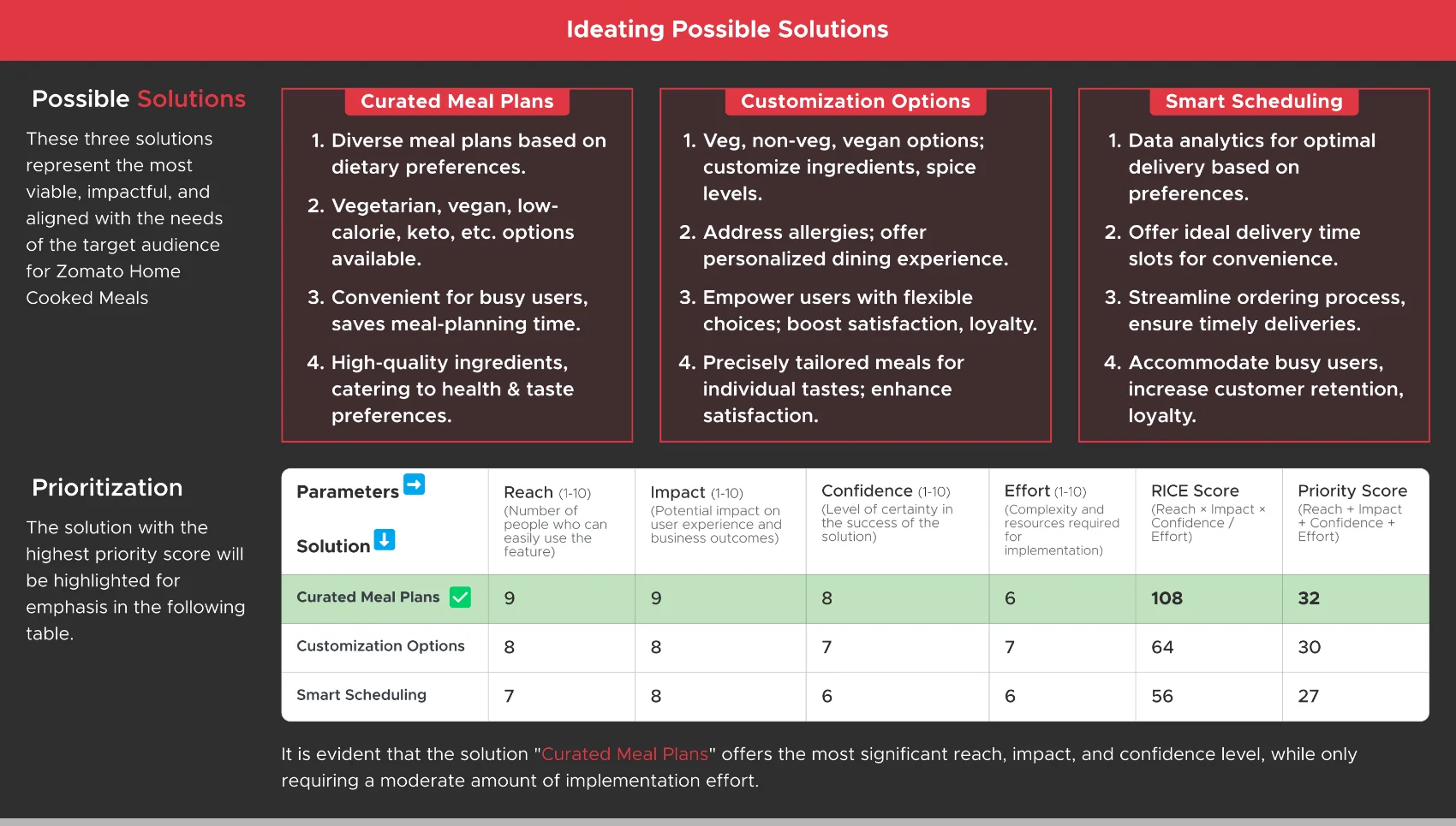
I scored three solution directions on Reach, Impact, Confidence and Effort. Curated Meal Plans won, with the strongest reach, impact and confidence for a moderate build.
★ Curated Meal Plans
Chosen for MVP
- Plans by dietary preference: vegetarian, vegan, low-calorie, keto. Chosen on the highest RICE score.
Customisation Options
Considered
- Veg, non-veg or vegan, with control over ingredients and spice levels, and allergies accounted for.
Smart Scheduling
Considered
- Data analytics picking delivery times from stated preferences and the slots that work.
Market and pricing
Sizing the opportunity
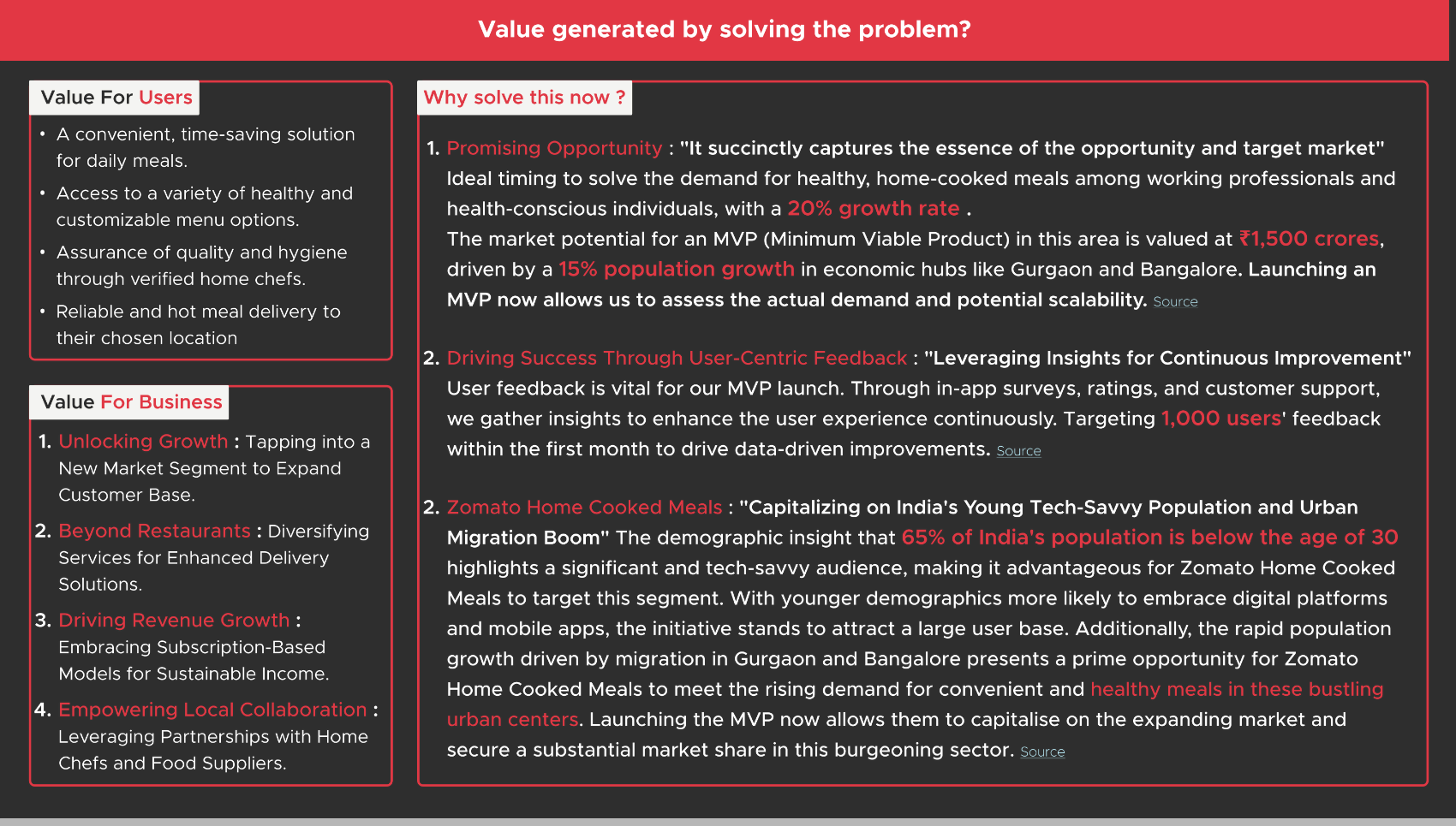
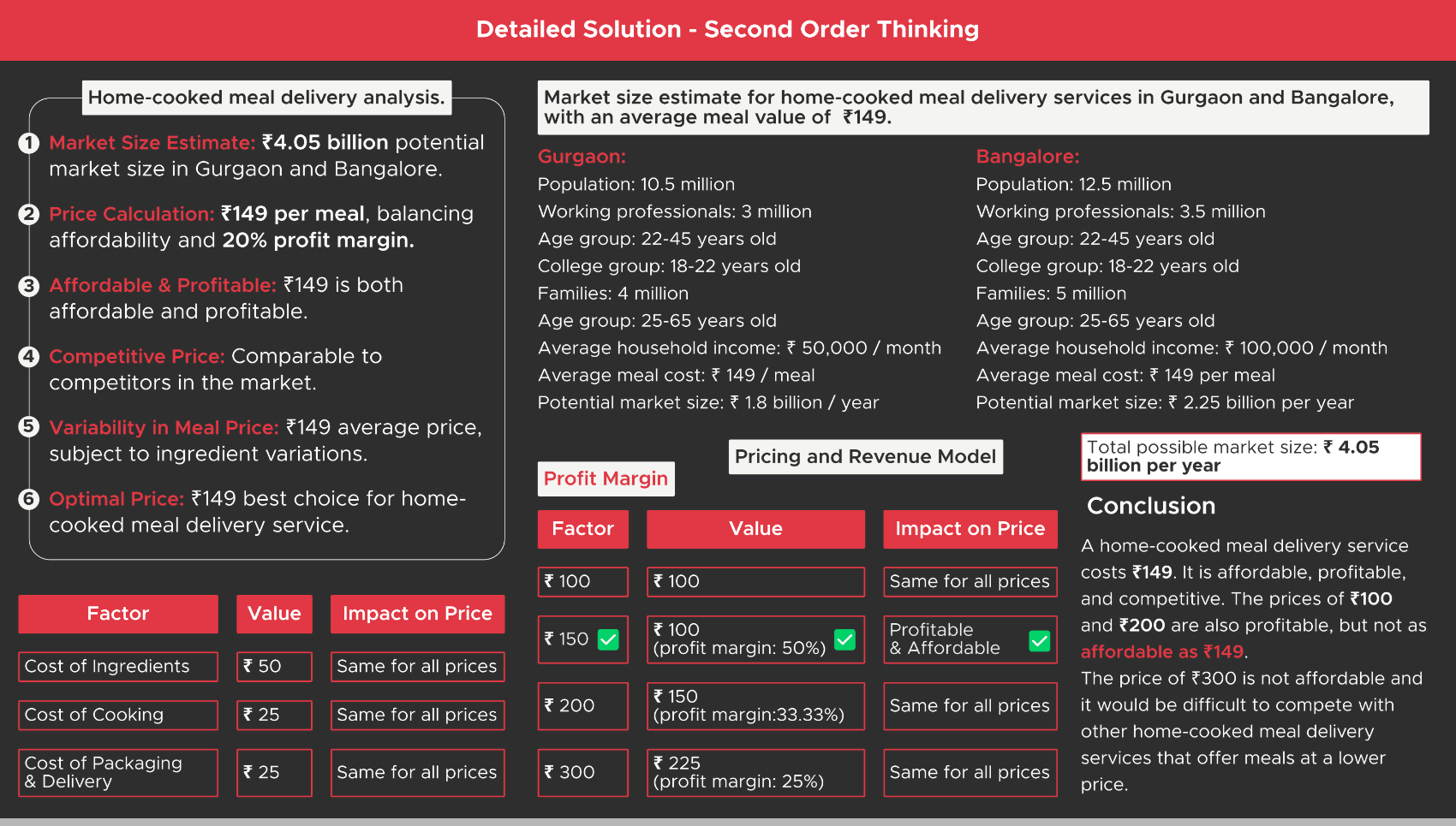
A bottom-up estimate for Gurgaon and Bangalore: at an average meal value of ₹149, which balances affordability against a 20% margin, the combined potential market comes to about ₹4.05 billion a year. An MVP now lets Zomato find out whether the demand is real before committing to scale.
₹4.05B
Est. annual size (Gurgaon + Bangalore)
₹149
Optimal price per meal (20% margin)
20%
Growth rate of the segment
Success metrics
North Star and measurement
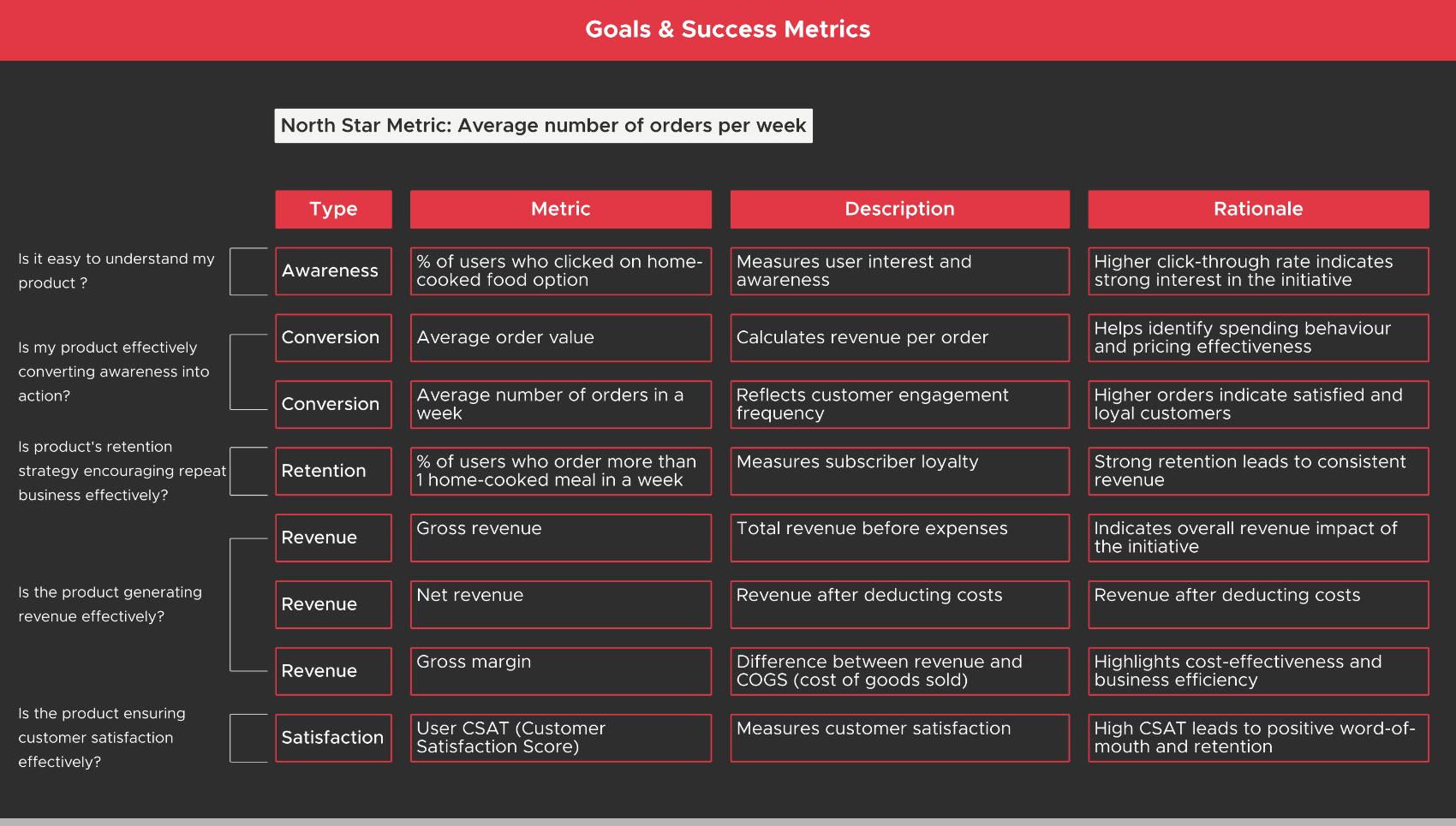
North Star metric: the average number of orders per week.
- Awareness: the share of users who click the home-cooked option.
- Conversion: average order value, and average orders per week.
- Retention: the share of users who order more than one home-cooked meal in a week.
- Revenue: gross revenue, net revenue and gross margin.
- Satisfaction: user CSAT, which feeds word of mouth and retention.
Risks and future scope
Where it could fail, and where it goes next
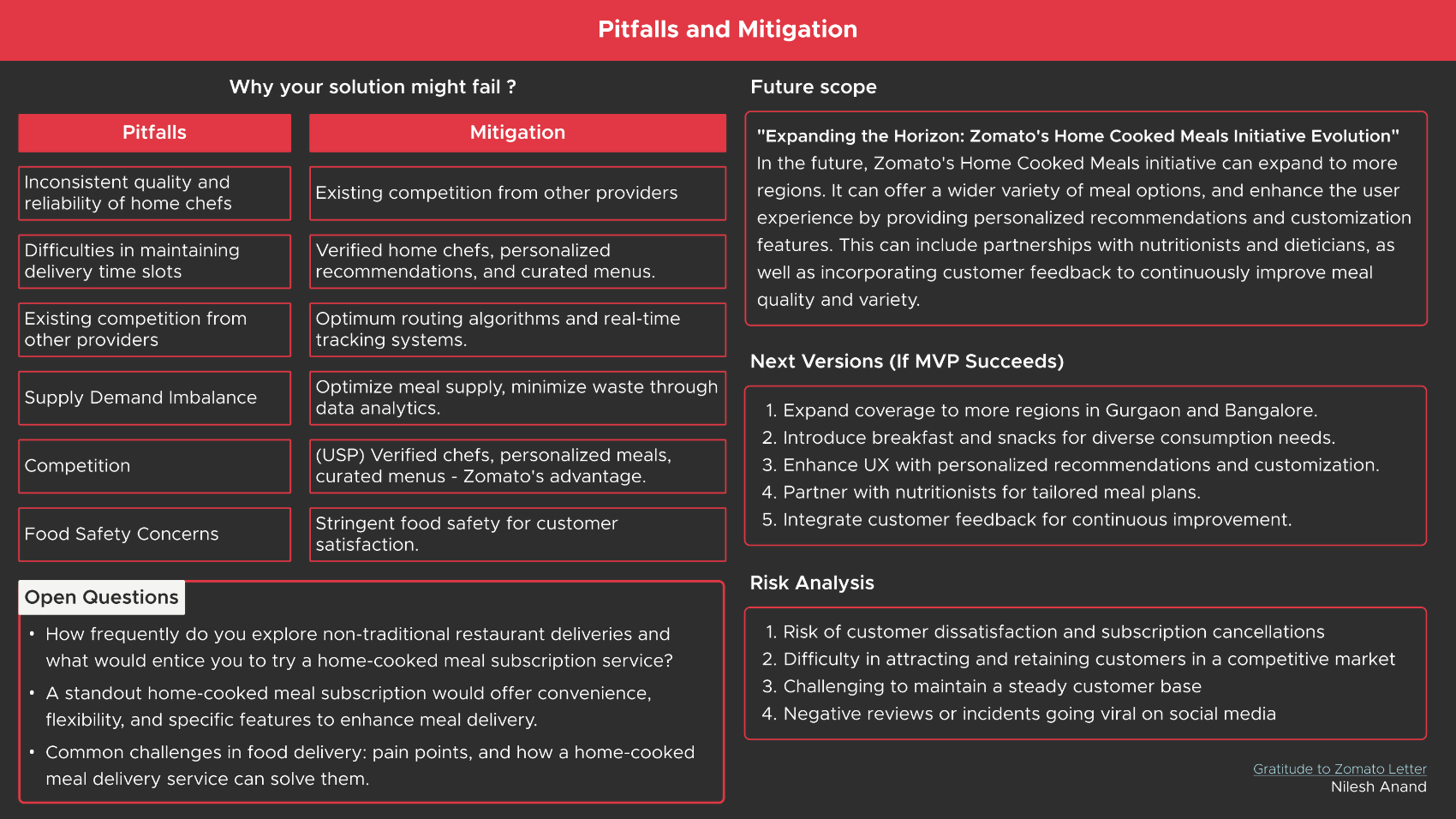
- Pitfalls: inconsistent home-chef quality, unreliable delivery slots, and the competition already there. The answers are verified chefs, personalised recommendations, and better routing.
- If the MVP succeeds: expand across Gurgaon and Bangalore, add breakfast and snacks, partner with nutritionists, and keep feeding customer feedback back into meal quality.