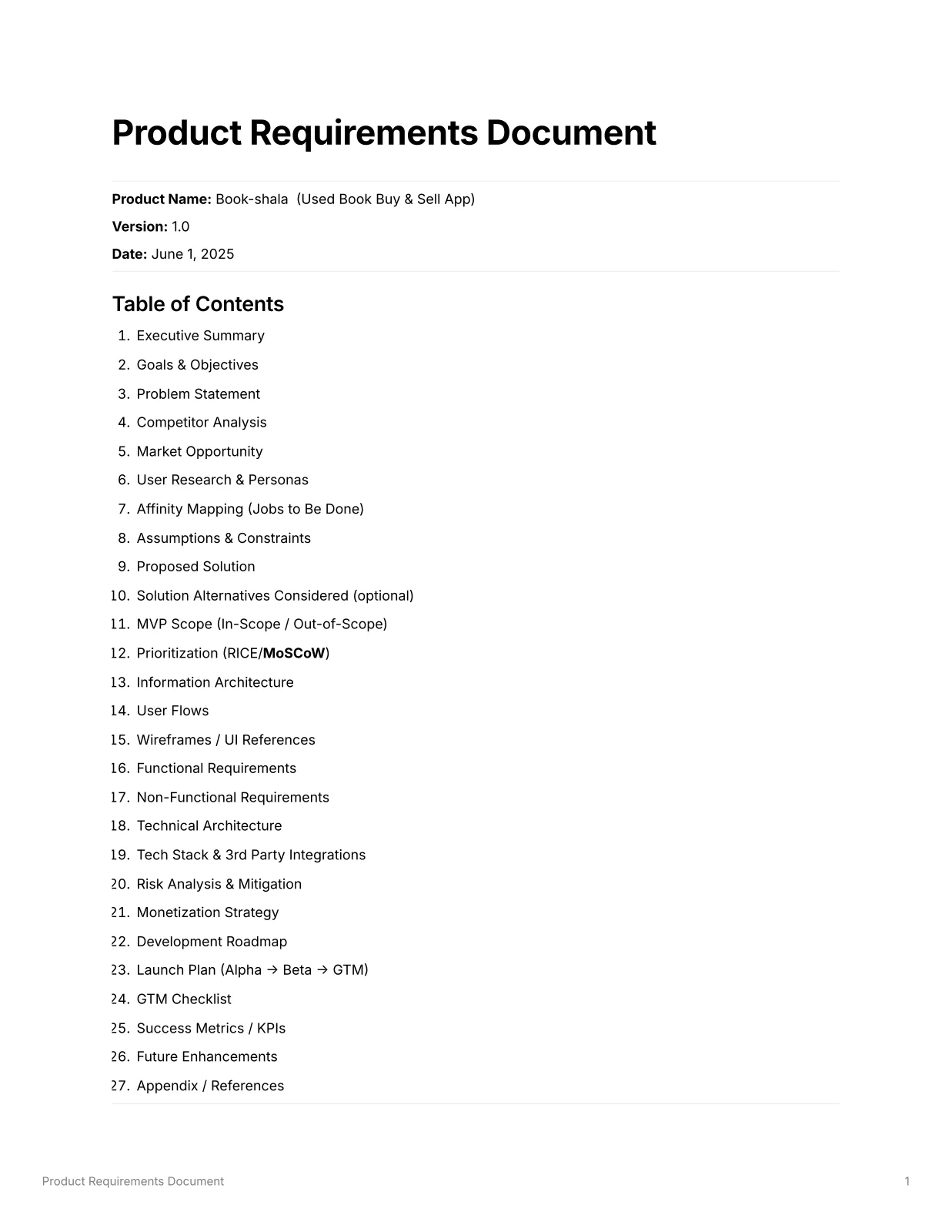
Problem
Why used-book buying is broken
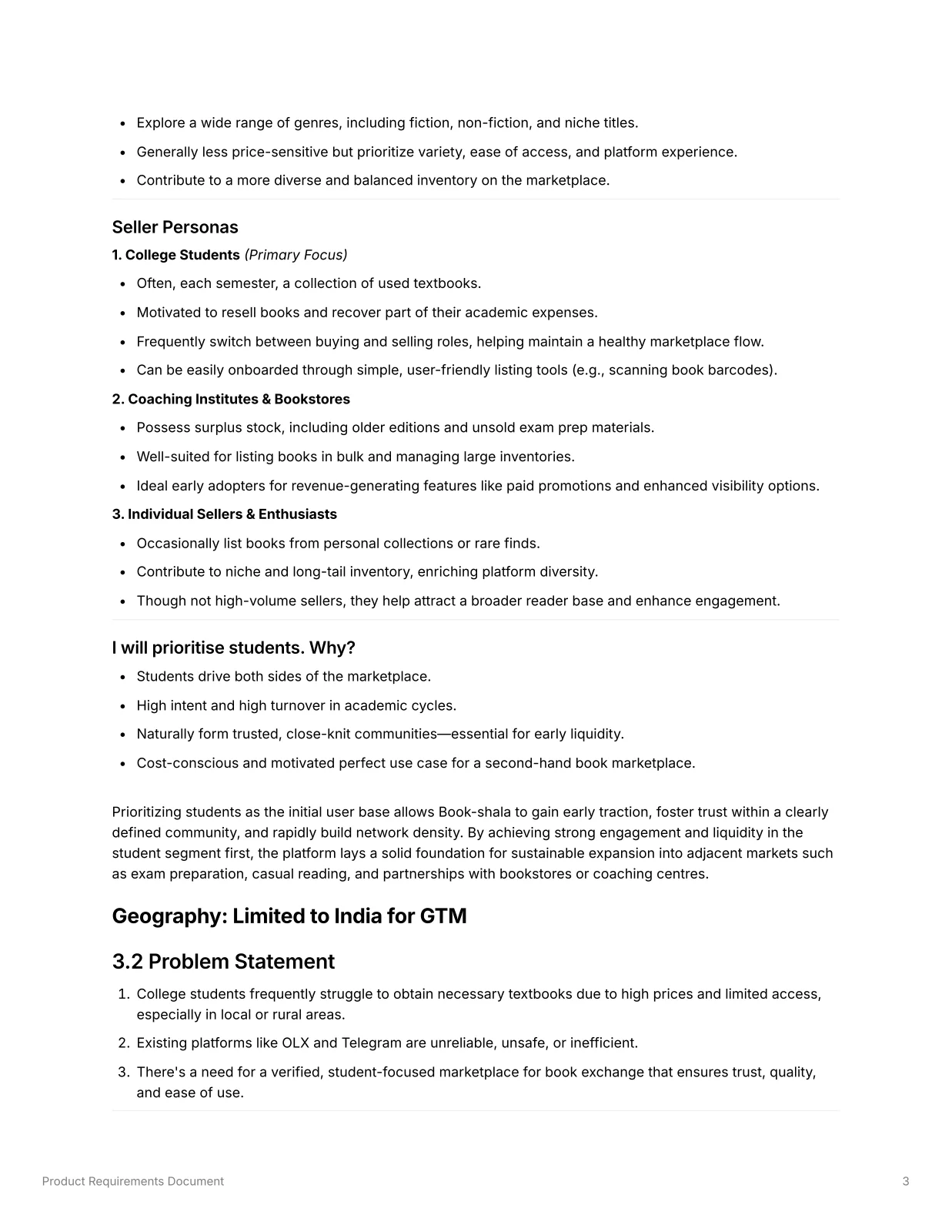
- College students struggle to get hold of textbooks, because prices are high and access is limited.
- Platforms like OLX and Telegram are unreliable and unsafe, and full of spam and fake listings.
- Nobody runs a verified, student-focused marketplace, so there is nowhere to buy with any confidence.
Users
Student-first, both sides of the market
Aditi, the bargain seeker
Buyer · 20, Pune, B.Com
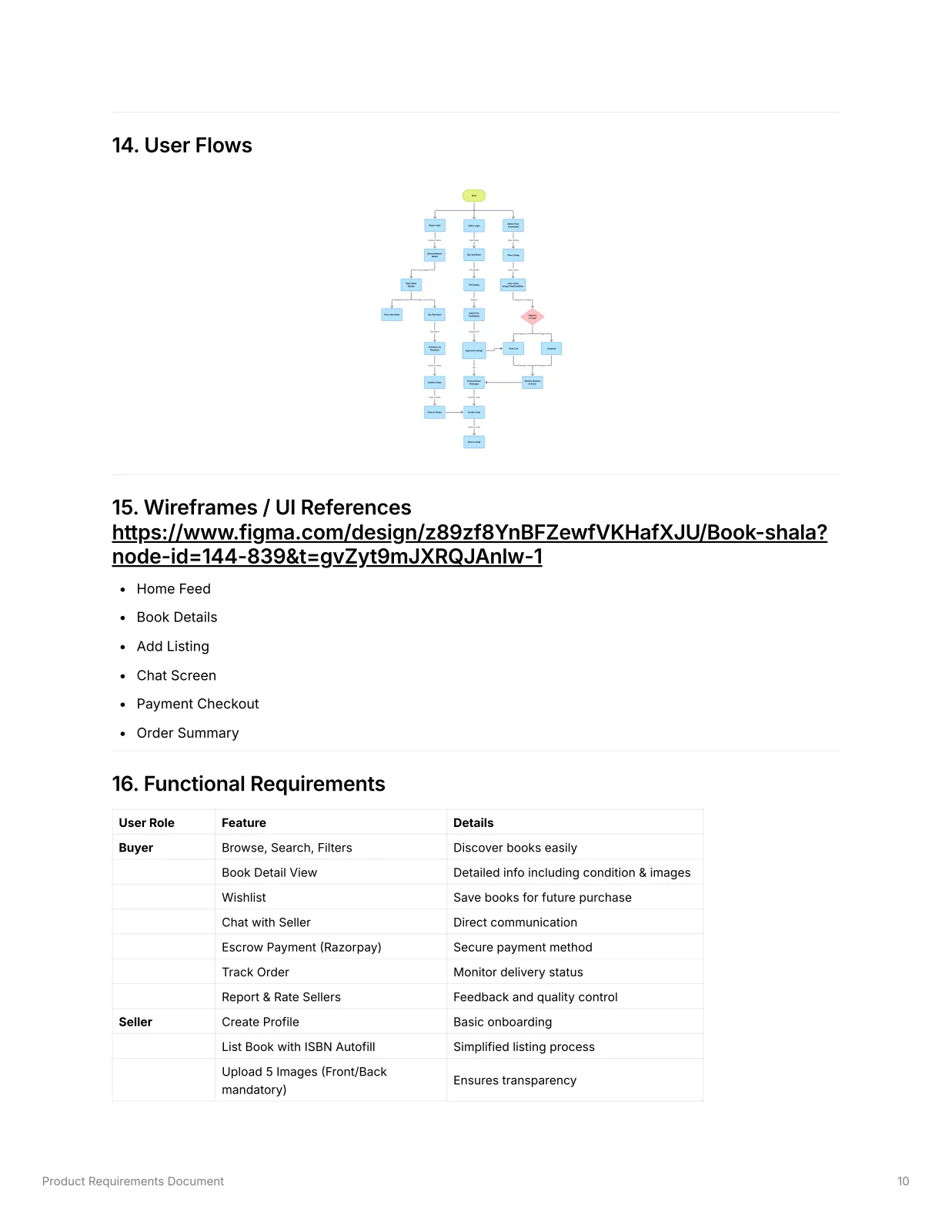
- Wants to save money, avoid scams, and have the book delivered.
- Pain: spammy chats, no tracking, duplicate PDFs.
- Trusts seller ratings, verified badges and a delivery guarantee.
Raj, the book offloader
Seller · 22, Bhopal, Engineering
- Wants to clear out used books for cash.
- Pain: no buyer interest, and endless negotiation when there is.
- Needs simplicity, visibility and a fast payout.
I put students first because they sit on both sides of the market. They buy and sell hard against the academic calendar, and they share a campus, which gives a marketplace a head start on trust before it has liquidity of its own.
Proposed solution
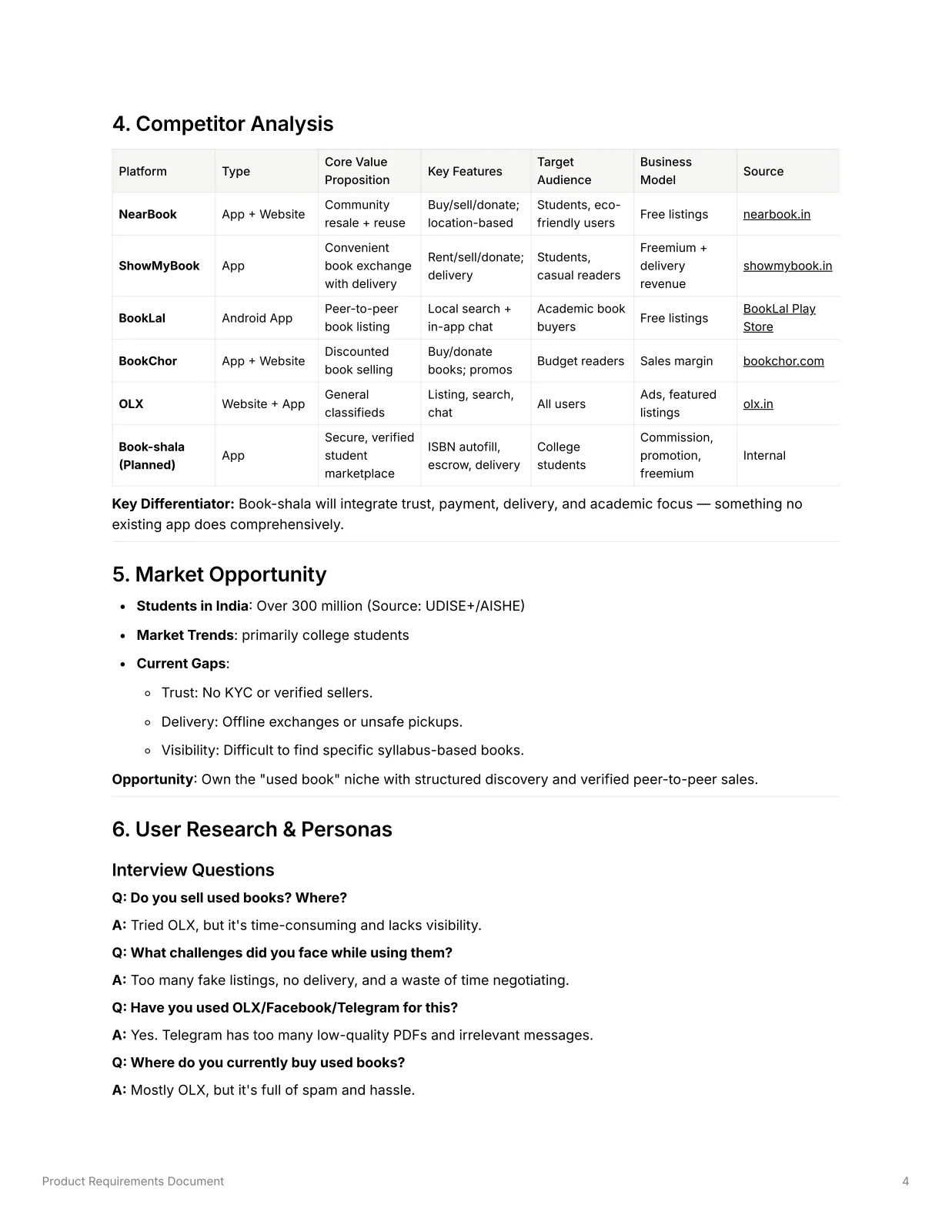
A trust-driven marketplace with delivery
Against a community-chat alternative, the trust-driven delivery model won on user NPS and on how much of it could be monetised. Five pillars:
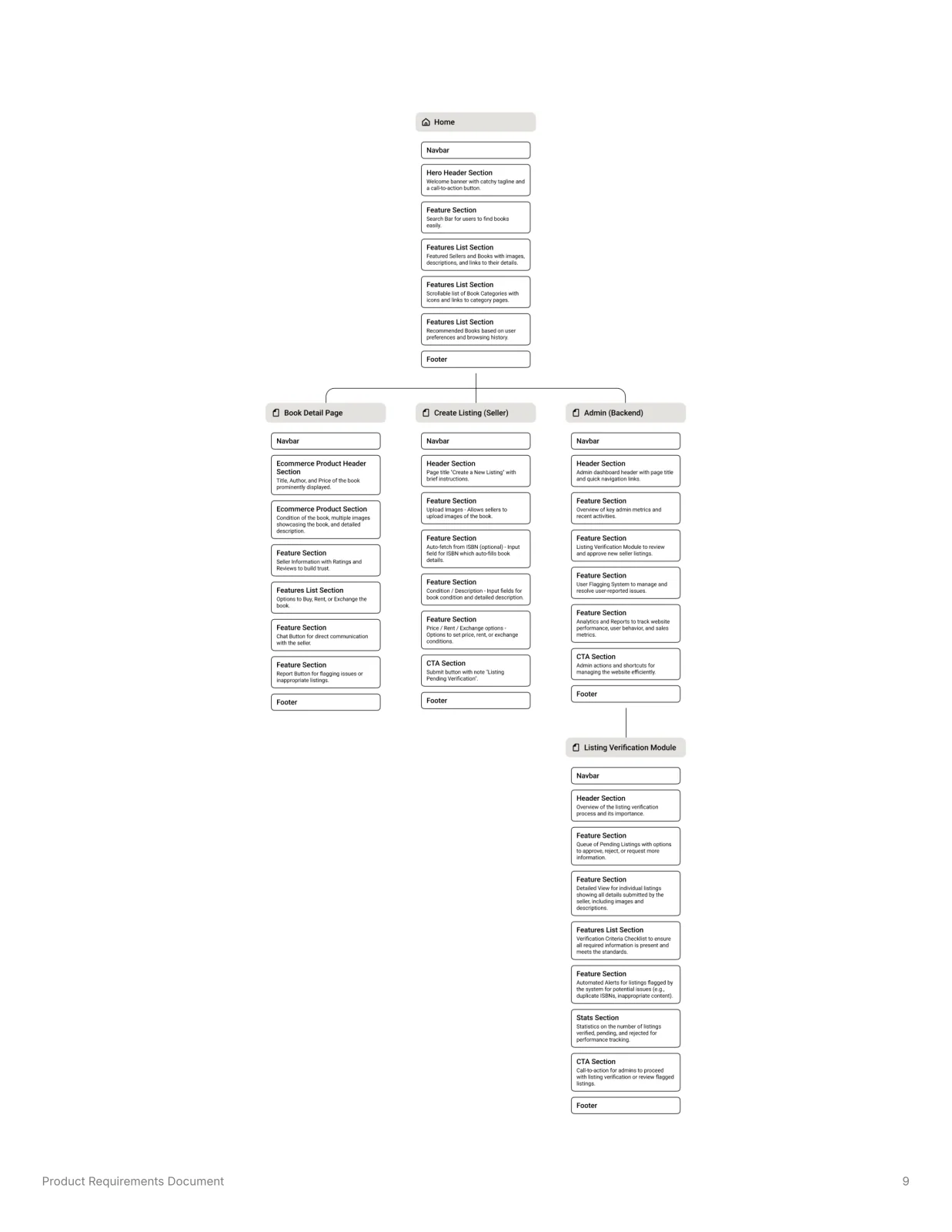
- Delivery-first listings: Courier integration means every listing can be delivered. Sellers set a pickup, buyers track the package.
- Trust and safety: Verified KYC badges, student-email checks, in-app seller ratings, and admin moderation.
- Search by ISBN or subject: Students find the exact book they need, and sellers list faster with ISBN autofill.
- Secure escrow payments: BookShala holds the buyer's money until delivery is confirmed, which takes most of the fraud risk out.
- Smart recommendations: Suggestions drawn from course, semester and what someone has bought before.
Prioritisation
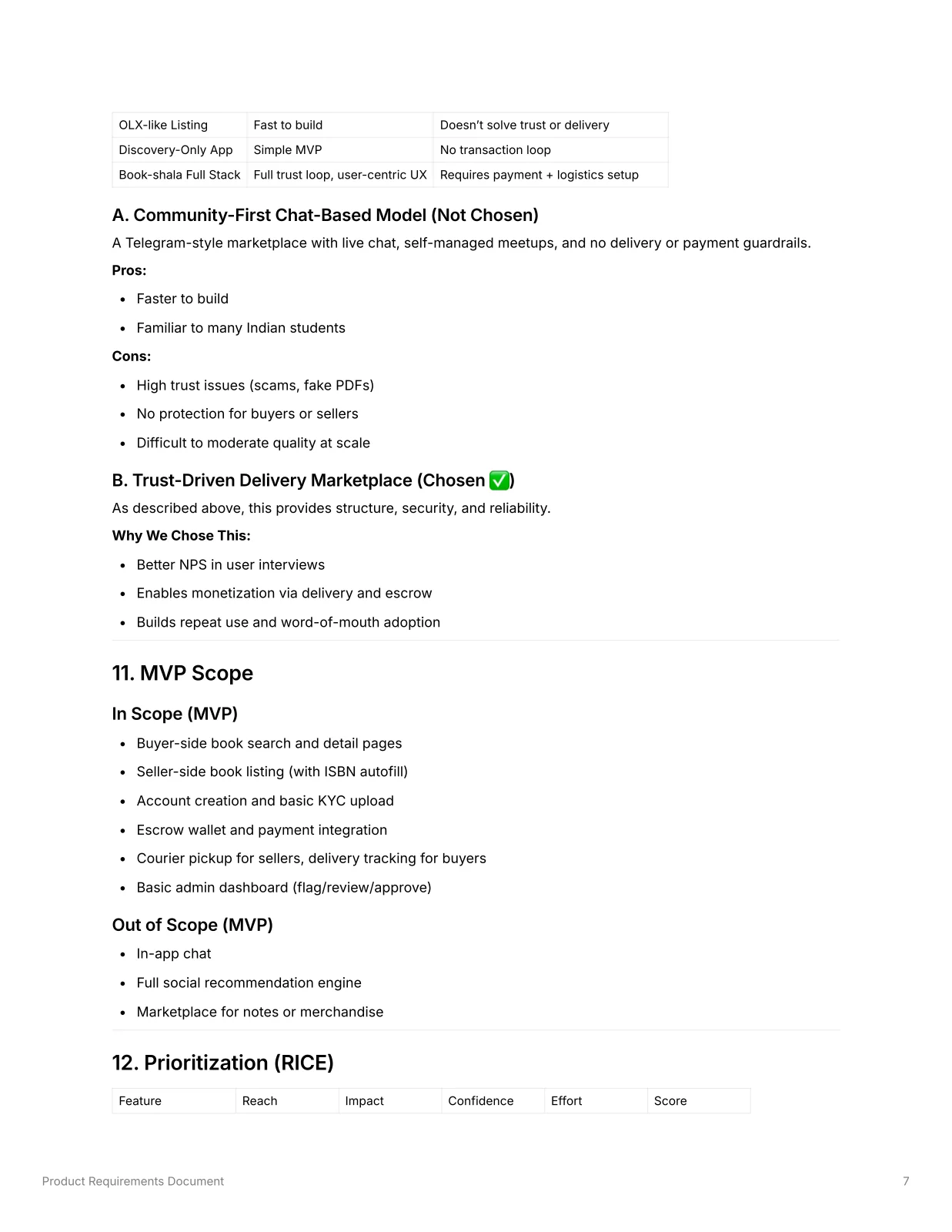
MVP scope and RICE
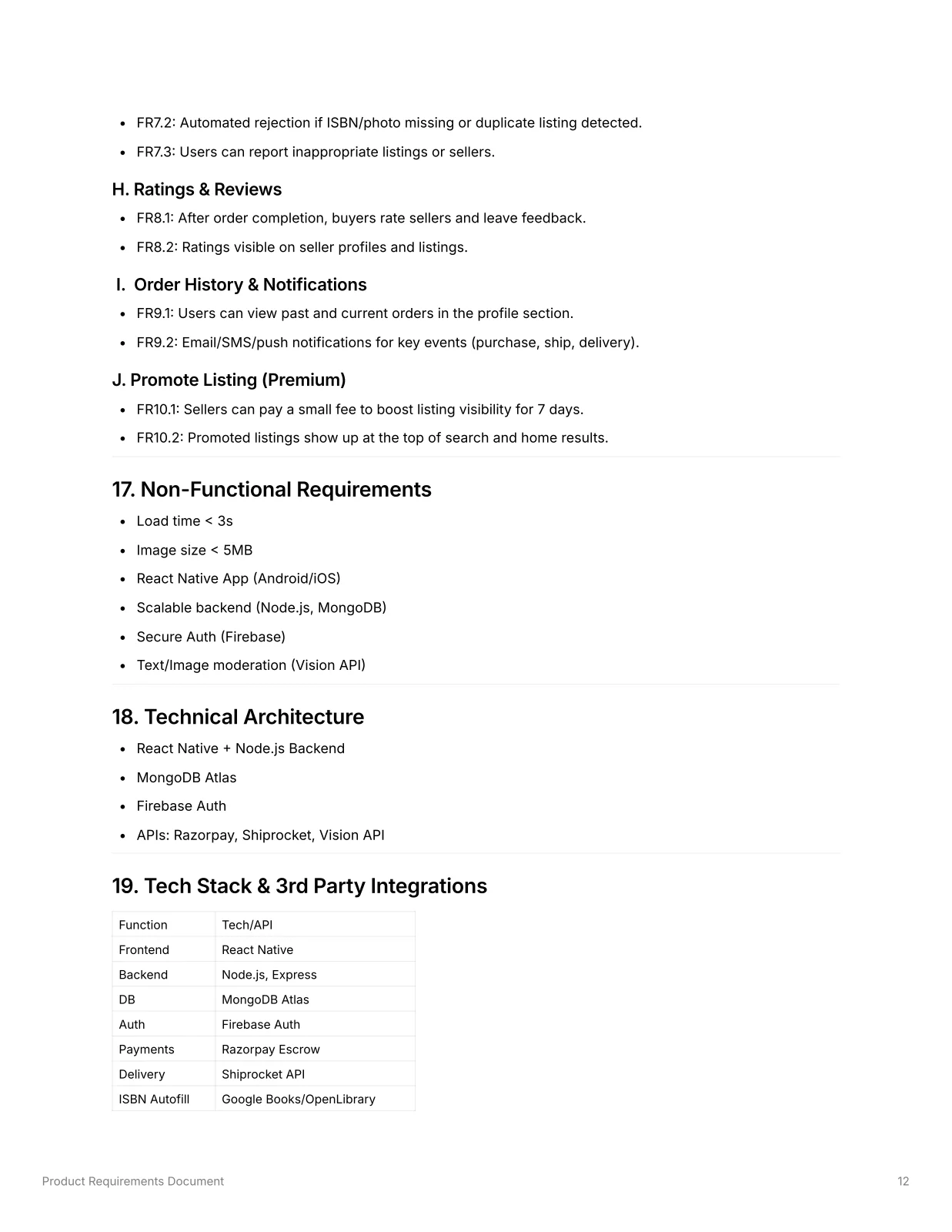
I scored features on Reach, Impact, Confidence and Effort, then sequenced the MVP with MoSCoW. The must-haves: verified KYC profiles, ISBN autofill, escrow payments, and buyer and seller history.
144
Seller Verification (KYC)
Architecture
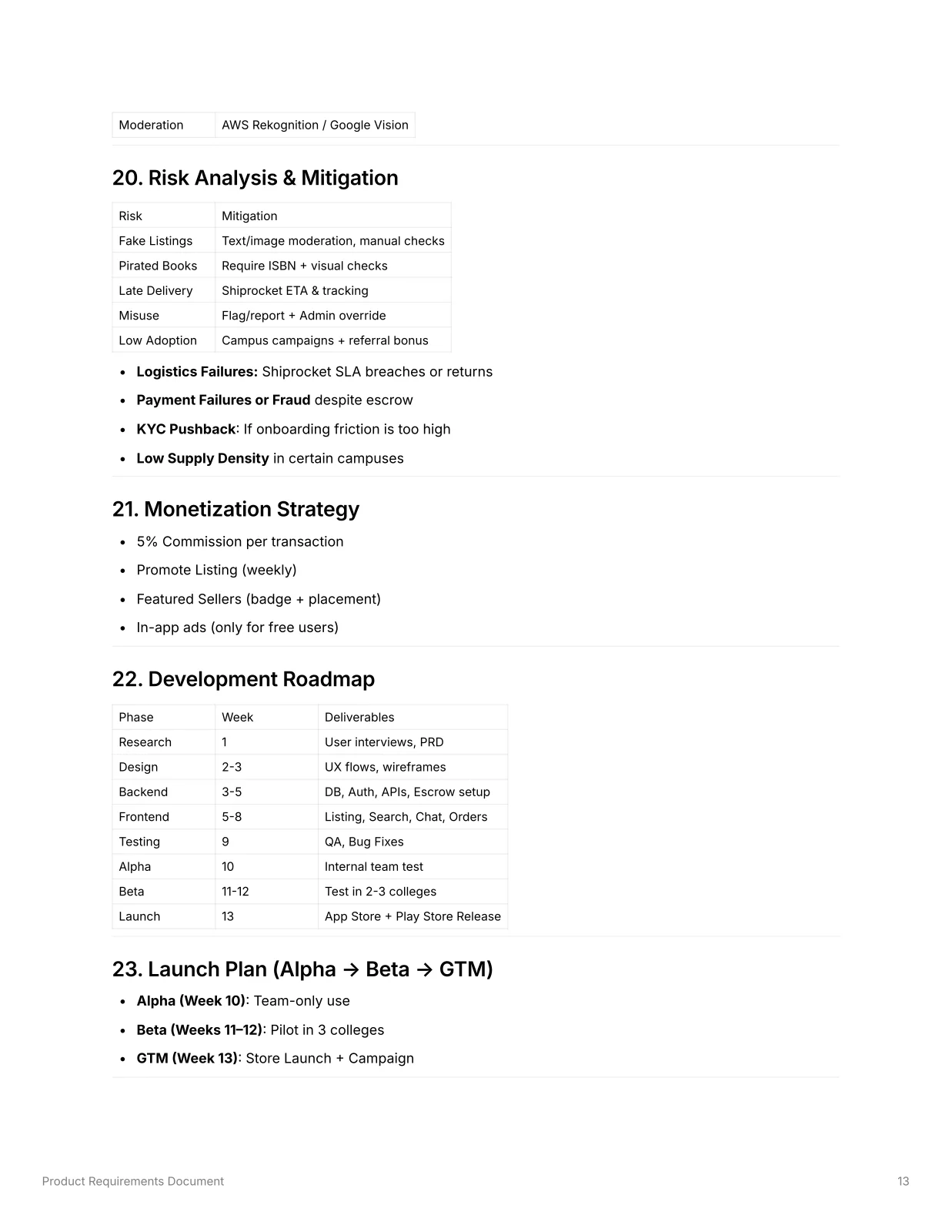
Tech stack and integrations
Frontend
React Native (Android / iOS)
ISBN
Google Books / Open Library
Moderation
AWS Rekognition / Google Vision
Business
Monetisation and success metrics
Revenue comes from a 5% commission on each transaction, promoted listings, featured-seller placements, and in-app ads. The targets:
10,000
App installs, Q1 target
5%
Commission per transaction