By the numbers
Market snapshot
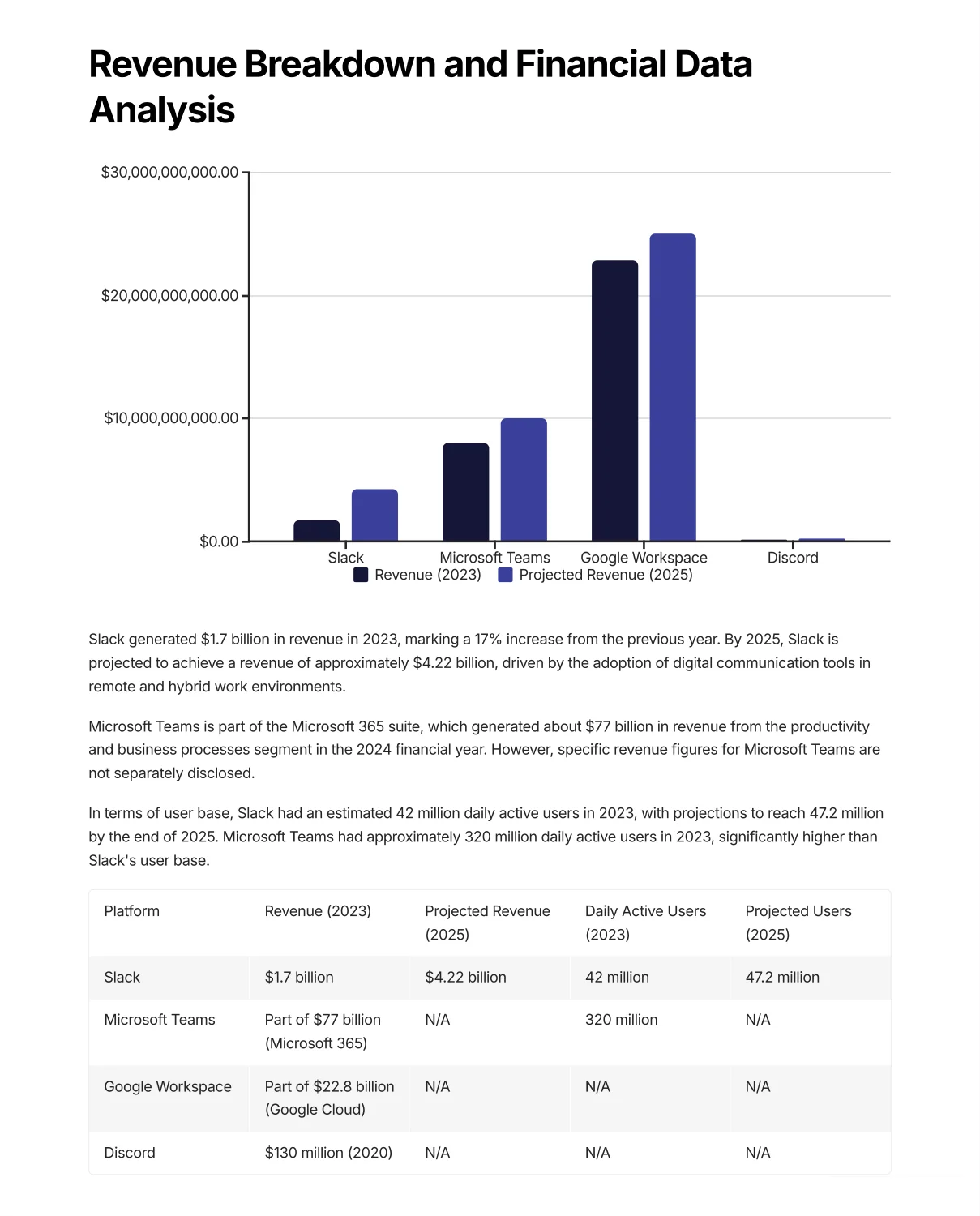
$1.7B
Slack revenue (2023)
320M
Teams monthly active users
42M
Slack daily active users
$77B
Microsoft 365 segment Teams sits in (FY24)
Teams is far ahead on raw user base, which the Microsoft 365 bundle explains on its own. Slack grows steadily and rates higher on satisfaction. Plenty of organisations run both.
Market
A big market, unevenly held
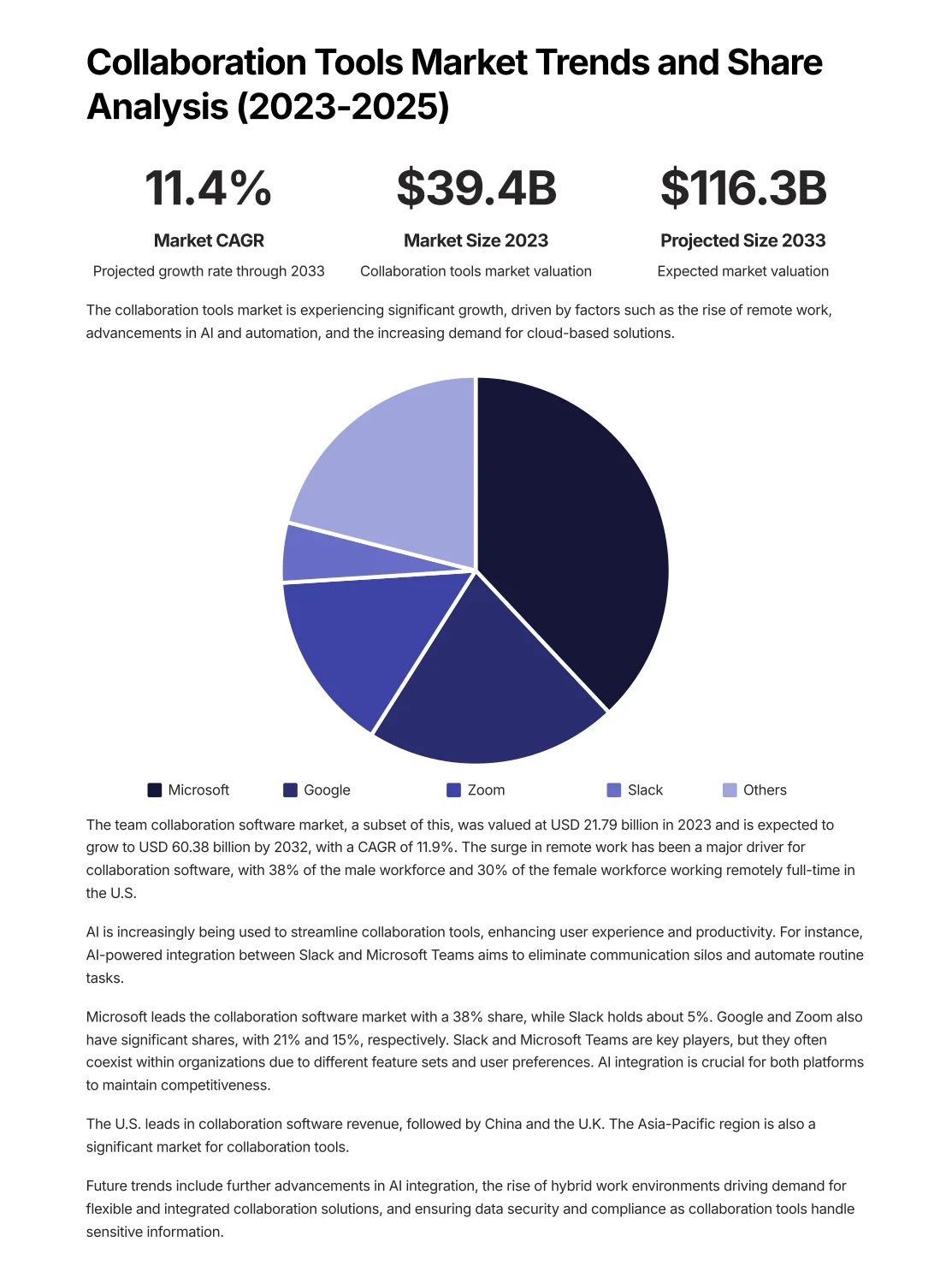
Collaboration tools were a $39.4B market in 2023, heading for $116.3B by 2033 at an 11.4% CAGR. The subset these two compete in was $21.79B in 2023 and is projected to reach $60.38B by 2032. Remote work drove much of it: 38% of the male and 30% of the female US workforce were home full time.
$39.4B
Collaboration tools market, 2023
38%
Microsoft share of collaboration software
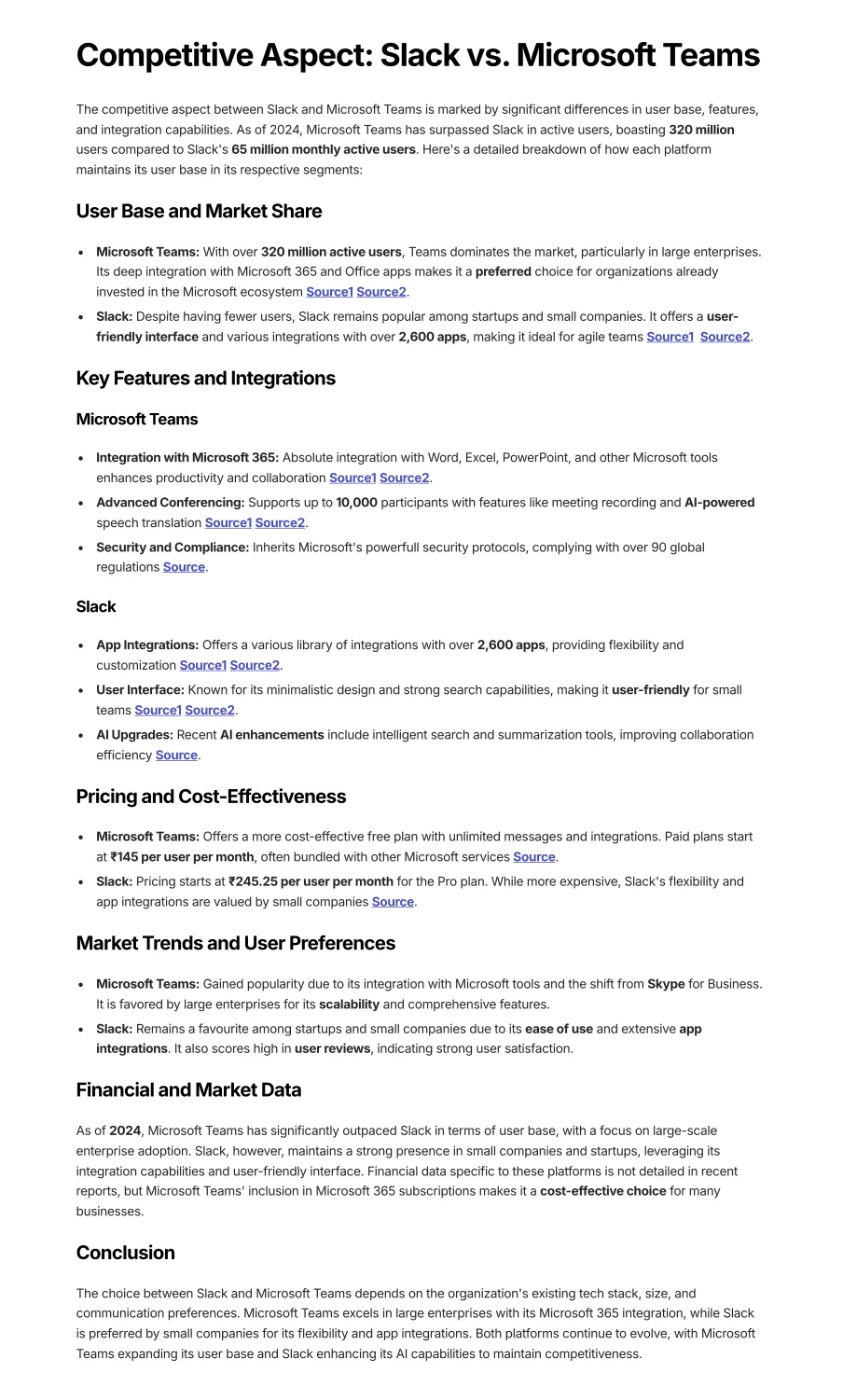
Microsoft leads at 38%, Google 21%, Zoom 15%, leaving Slack around 5%. The gap says less about the products than about how they get bought. The two sit side by side often enough that share is a poor proxy for preference.
Revenue
What each one reports
The two report their numbers very differently.
- Slack: $1.7B in 2023, up 17% year on year, on the back of remote and hybrid work. 42M daily active users in 2023, projected to be 47.2M by the end of 2025.
- Microsoft Teams: Never disclosed separately. It sits inside the Microsoft 365 productivity and business processes segment, about $77B in FY24, and carries roughly 320M monthly active users.
- Google Workspace: Also bundled, inside Google Cloud's $22.8B.
Slack has to earn its line on an invoice. Teams can sit at ₹115 a seat because its real job is making the rest of Microsoft 365 harder to leave.
Head to head
How they differ
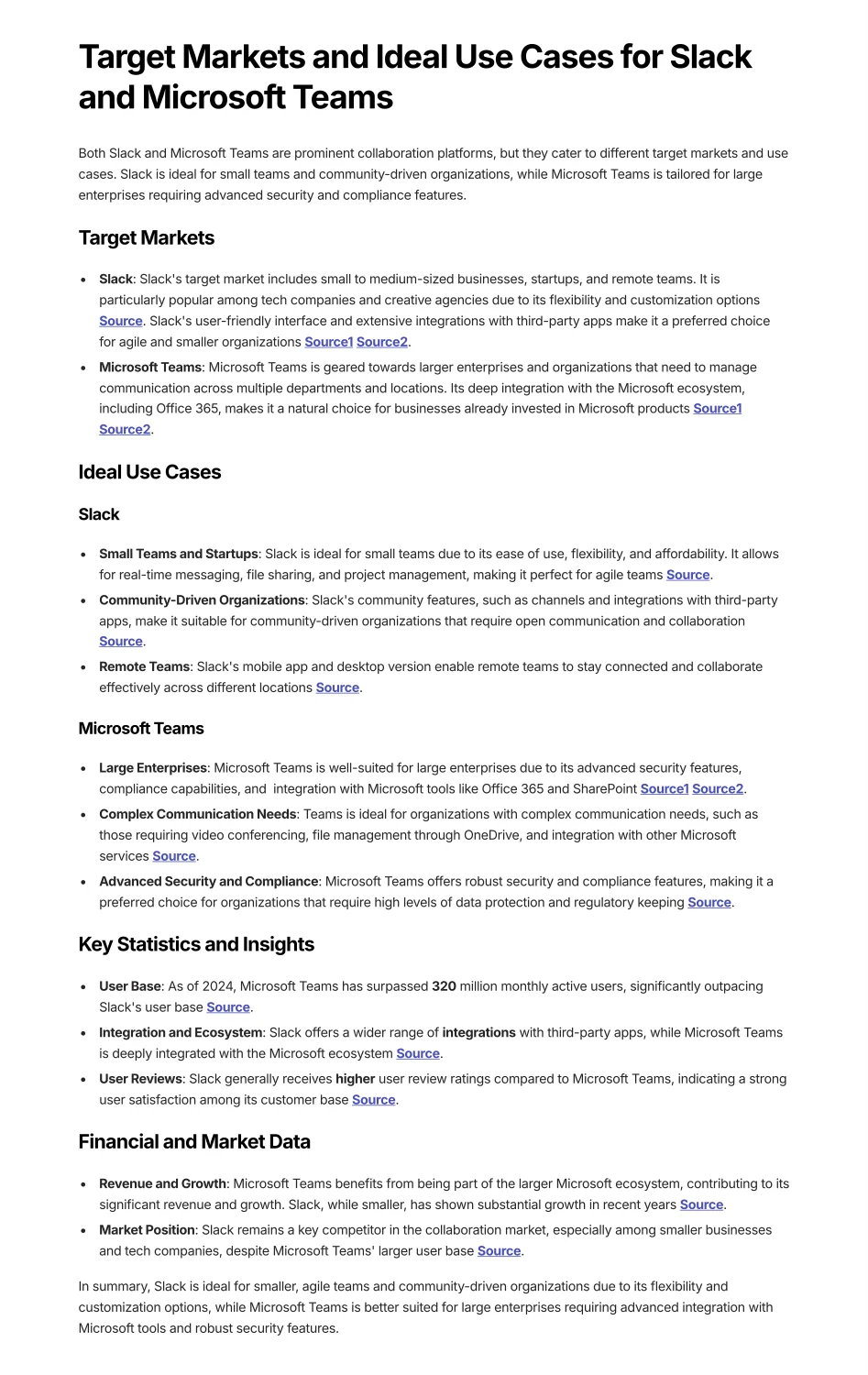
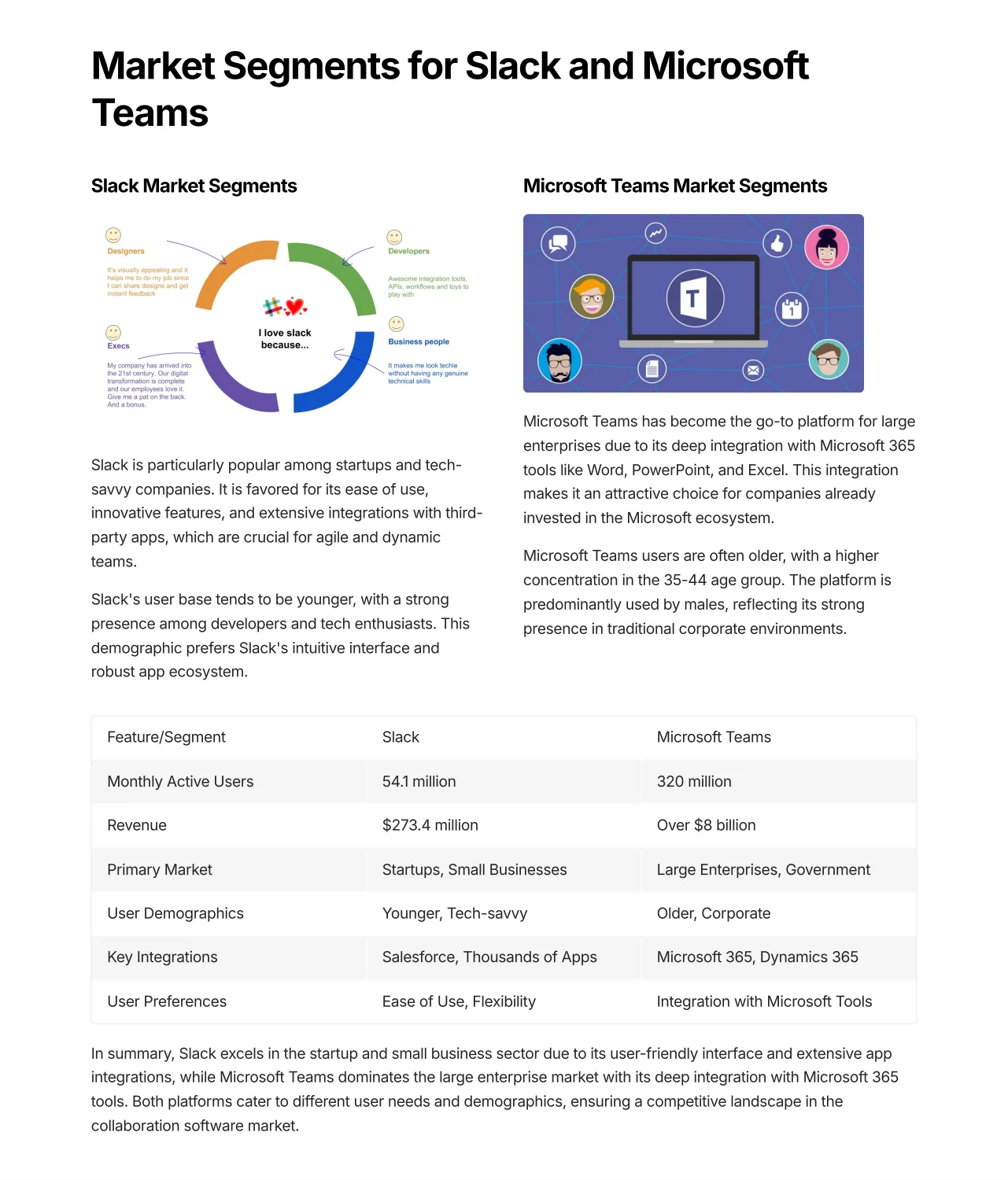
Target market
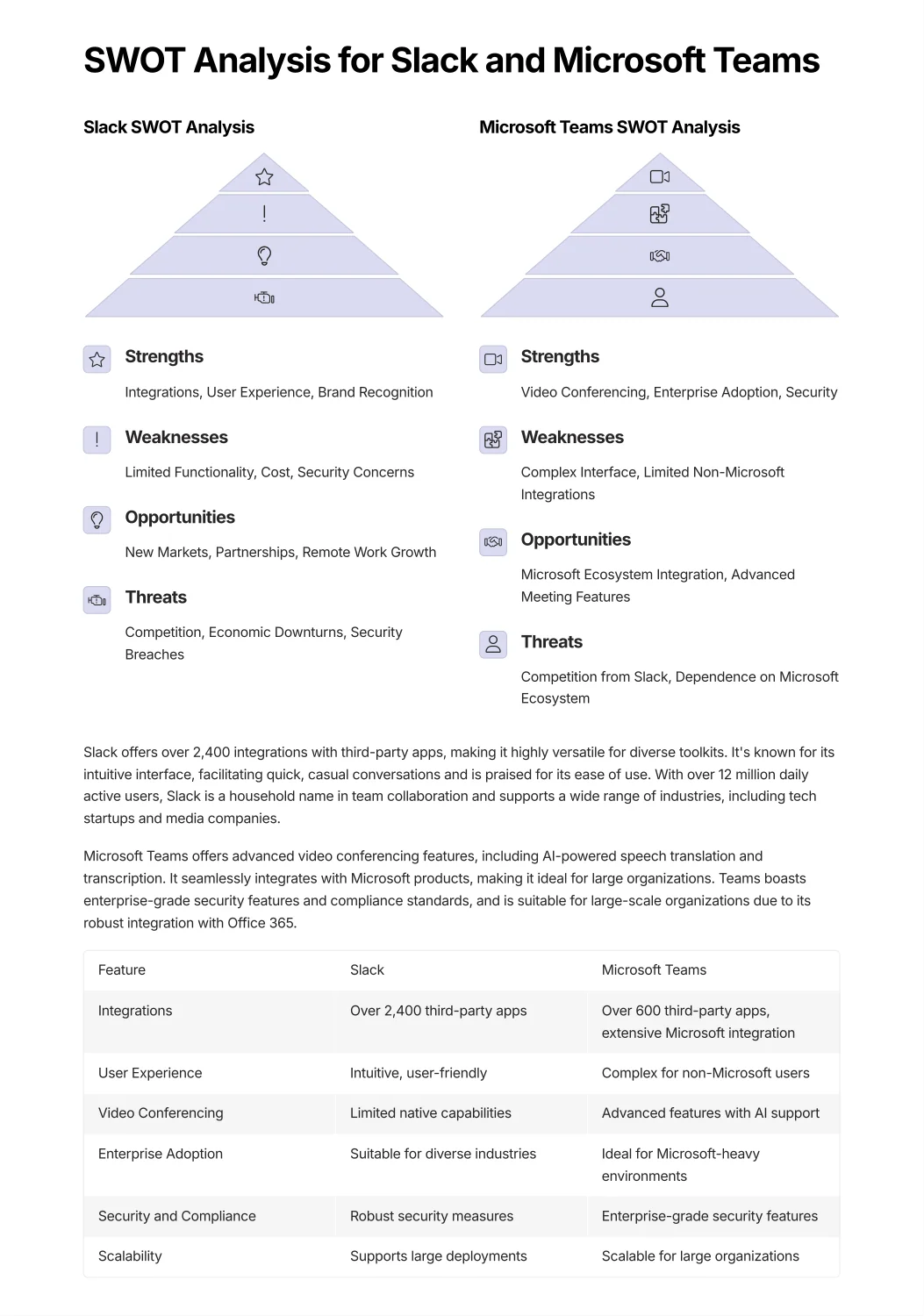
Slack: Startups and small, fast-moving teams
Microsoft Teams: Large enterprises and government
GTM strategy
Slack: Product-led growth, freemium
Microsoft Teams: Bundled with Microsoft 365
Integrations
Slack: 2,600+ third-party apps in the directory
Microsoft Teams: Around 2,100, plus native depth across Microsoft 365
Video
Slack: Limited. Huddles, up to 50 people on paid plans
Microsoft Teams: Advanced and AI-assisted. 300 on paid plans, far more for live events
AI
Slack: Slack AI, for search and recaps
Microsoft Teams: Microsoft Copilot
Lowest paid plan
Slack: Pro, ₹245.25/user/mo
Microsoft Teams: Essentials, ₹115/user/mo
Go-to-market
Two very different playbooks
- Slack, product-led: a freemium tier and 2,600+ integrations let the product sell itself, spreading one team at a time.
- Teams, bundle-led: included in Microsoft 365, so it arrives “for free” wherever Office already lives, at a lower cost per seat as the company grows.
Pricing
The bundle, line by line
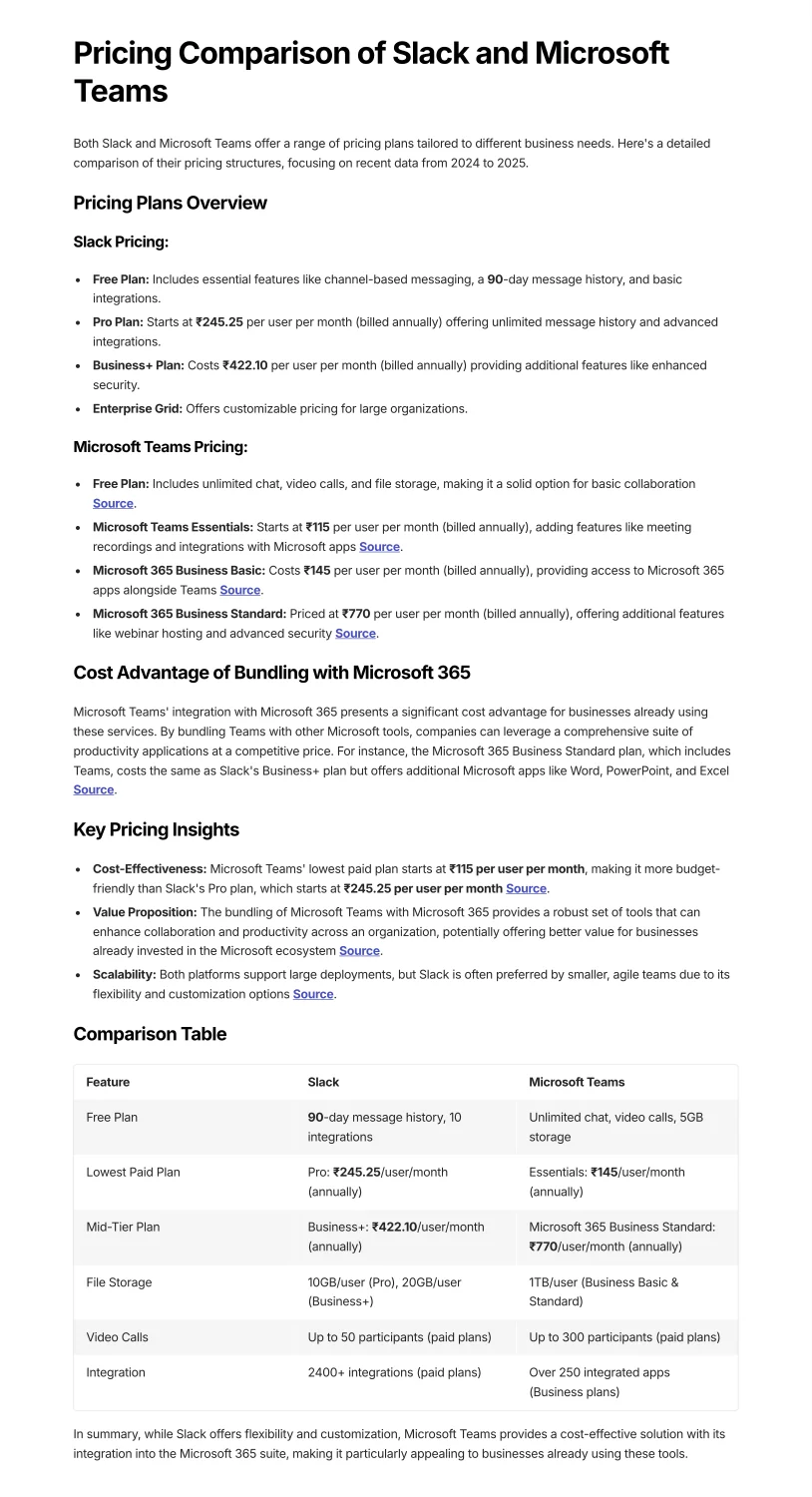
Per user per month, billed annually. Both run a freemium model. The difference is what each paid tier includes.
Free plan
Slack: 90-day message history, 10 integrations
Microsoft Teams: Unlimited chat and video calls, 5GB storage
Lowest paid plan
Slack: Pro, ₹245.25
Microsoft Teams: Essentials, ₹115
Mid tier
Slack: Business+, ₹422.10
Microsoft Teams: Microsoft 365 Business Standard, ₹770
File storage
Slack: 10GB/user on Pro, 20GB/user on Business+
Microsoft Teams: 1TB/user on Business Basic and Standard
Video calls
Slack: Up to 50 participants on paid plans
Microsoft Teams: Up to 300 participants on paid plans
Integrations
Slack: 2,600+ on paid plans
Microsoft Teams: 250+ integrated apps on Business plans
Top tier
Slack: Enterprise Grid, custom pricing
Microsoft Teams: Bundled upward through the Microsoft 365 ladder
Microsoft 365 Business Standard costs more than Slack’s Business+, but it includes Word, Excel and PowerPoint. For a company already on Office, Slack has to be worth paying for on top of software they own.
SWOT
Strengths and gaps
Slack: strengths
Integrations, user experience and brand recognition, with a higher G2 rating (4.5 against 4.3).
Slack: weaknesses
Limited native video, higher paid pricing, and fewer built-in compliance features.
Teams: strengths
Enterprise adoption, advanced conferencing and security. HIPAA, GDPR and ISO 27001 compliant.
Teams: weaknesses
A steeper learning curve, and fewer third-party integrations outside the Microsoft world.
Verdict
Who should pick what
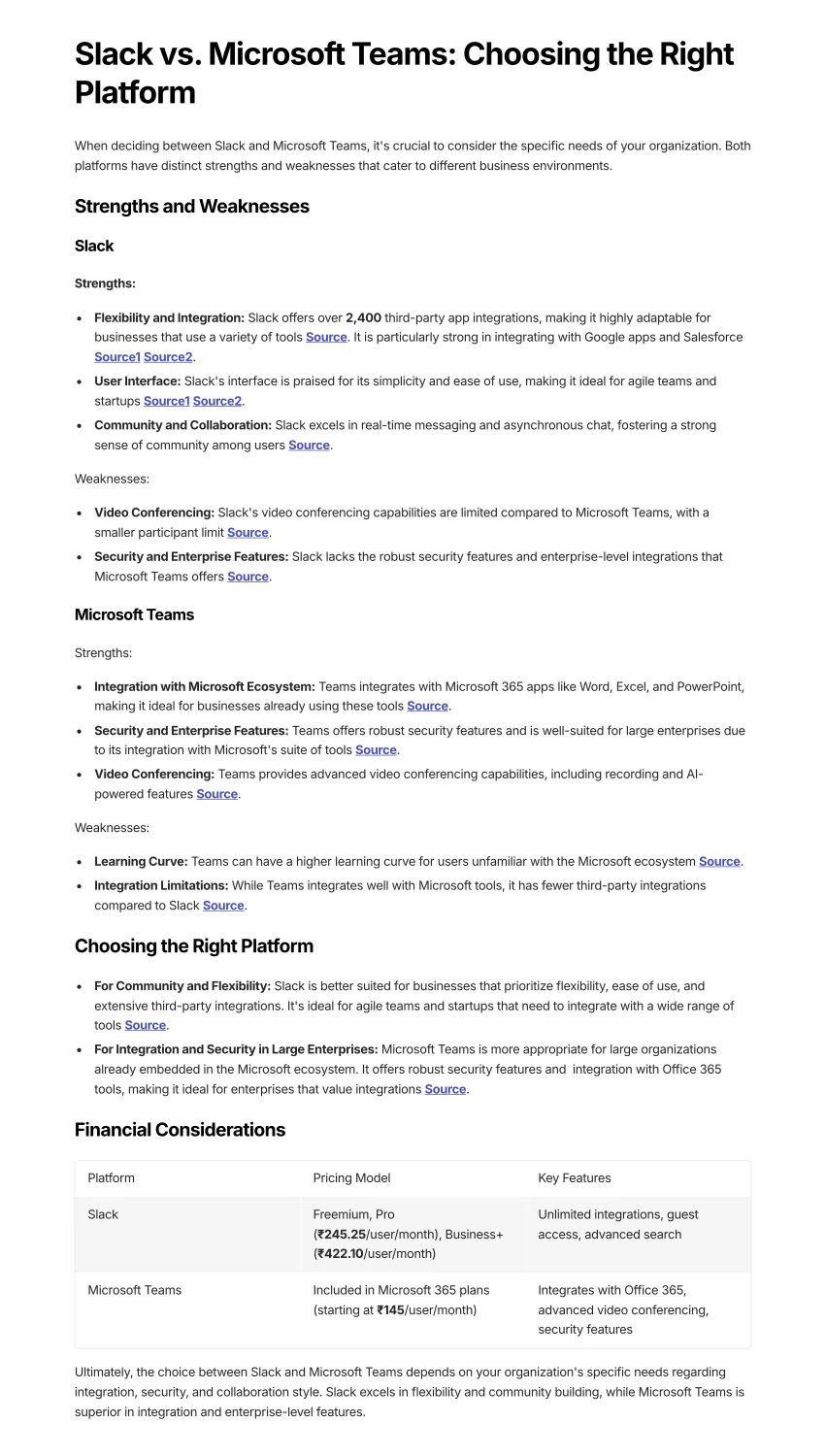
It comes down to what an organisation already runs and how it likes to work. Slack suits teams that want flexibility and a wide choice of tools, which usually means startups and small teams. Microsoft Teams suits large enterprises already inside the Microsoft ecosystem, where integration, security and compliance carry more weight than the interface does.